
Running her fingers over the dips and protrusions of a decades-old skull, Raven Watkins was struck by the idea of grief while thinking about the life this person had lived. The bereftness of loved ones left behind. The sorrow and anger that permeates communities and countries in periods of war. The trauma that becomes generational in the wake of turmoil.
At the time, Watkins, a Florida State University undergraduate studying anthropology through the College of Arts and Sciences and studio art through the College of Fine Arts, was abroad in Chelva, Spain for the summer, excavating and studying bone structures at historical battlefields. The month-long experience included classes and fieldwork providing hands-on opportunities to work with and catalog archaeological remains from the Spanish Civil War, which lasted from 1936 to 1939.
“I research grief and loss in Spanish culture, and this experience was monumental,” Watkins said. “I was inspired to learn more about historical and cultural elements of the Spanish Civil War while studying remains through the Center for Field Sciences School in Chelva — I’m inspired by the human resilience that came from this repression.”
After studying in Valencia, Spain with FSU International Programs in 2024, Watkins wanted to further explore Spanish culture and leverage her dual areas of study through a research project, leading her to the Center for Undergraduate Research and Academic Engagement IDEA Grant program. IDEA Grants help FSU undergrads advance their academic careers by funding research and the development of new or existing ideas or creative projects like the one Watkins had in mind.
Following her successful proposal submission, Watkins was awarded the IDEA Grant program’s Tyler Center for Global Studies Fellowship to support her work and fund her Summer 2025 studies, and was also supported by the Lisa Scott Undergraduate Research Award for first-generation students. This allowed her to learn bioarchaeology techniques including osteological analysis that lets her ascertain age, sex, and the lifestyle of the individuals recovered from the civil war’s battlegrounds.
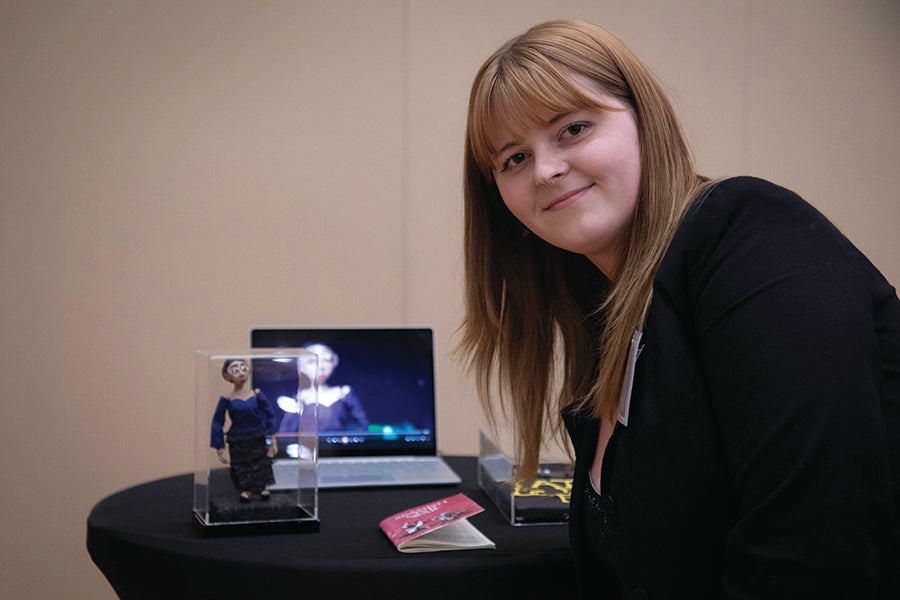
“Researching anthropology gives me a feeling of purpose and feels like my calling,” Watkins said. “Learning holistically about humans, culture, and biology makes me want to create. My art is symbolic, but I focus on depictions of real subjects. It’s important for me to intimately understand all aspects of the human — biological aspects like the body as well as expression of emotions and the history of grief.”