
An underwater wellhead pipe leaks. Millions of gallons of oil gush onto the ocean floor. While the full consequences of this large spill won’t be seen for years, beneath the water’s surface, an important part of the area’s marine ecosystem is already changing because of microbes. These tiny living organisms, ranging in size from invisible to the naked eye to the width of a nickel, possess the ability to consume contaminants produced by the leak, meaning they literally eat oil.
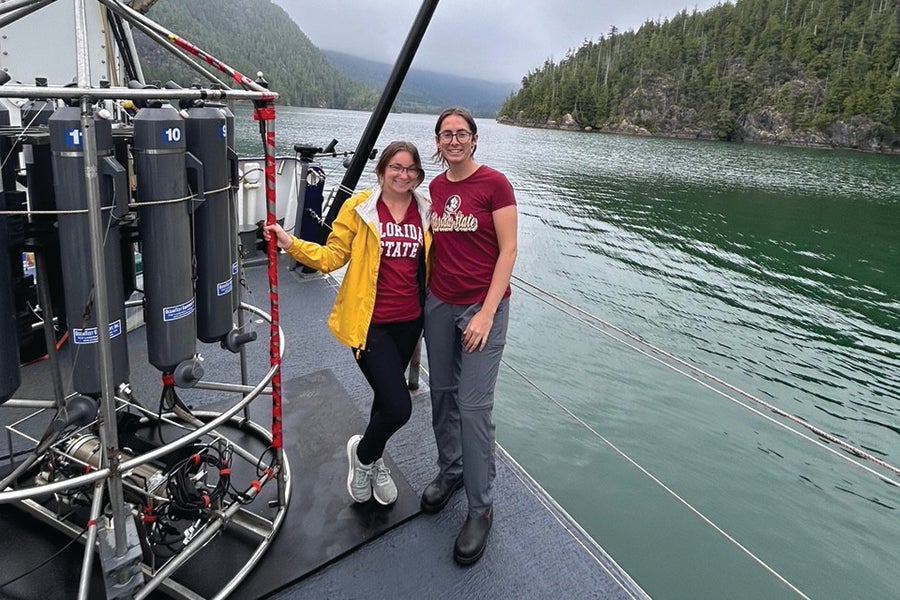
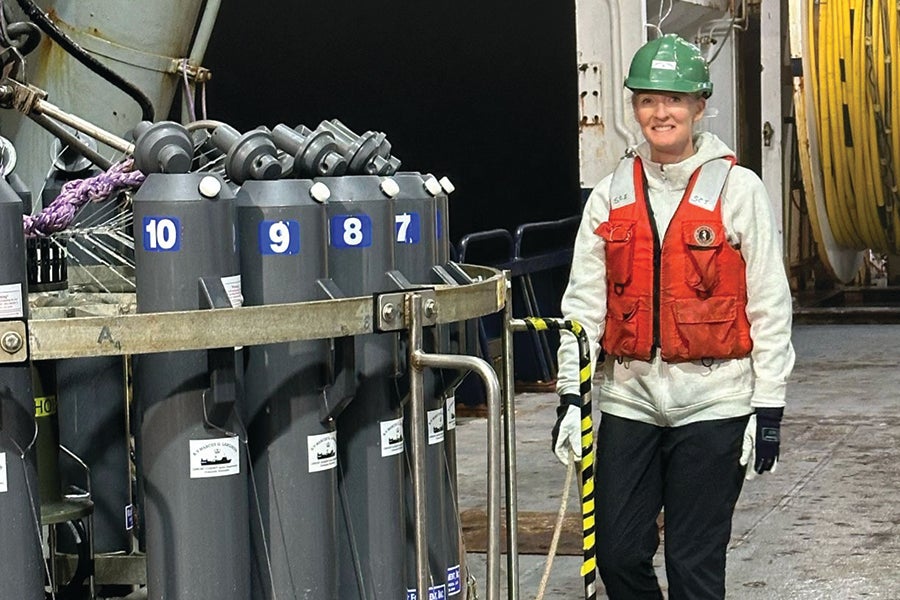
Aboard a research vessel on the surface, Olivia Mason, then a postdoctoral researcher, collects samples from the water column to study the microbial response to the spill. Her research on these samples will go on to provide critical insights about the event that broaden our understanding of long-term impacts to ocean health and productivity.
“Discovering new information about microbes, which are difficult to grow in the lab due to their physiology, is thrilling,” Mason said. “My efforts increased our understanding of changes in microbial communities during major events like the 2010 Deepwater Horizon oil spill, allowing us to better predict the microbial response during subsequent ecosystem disturbances.”
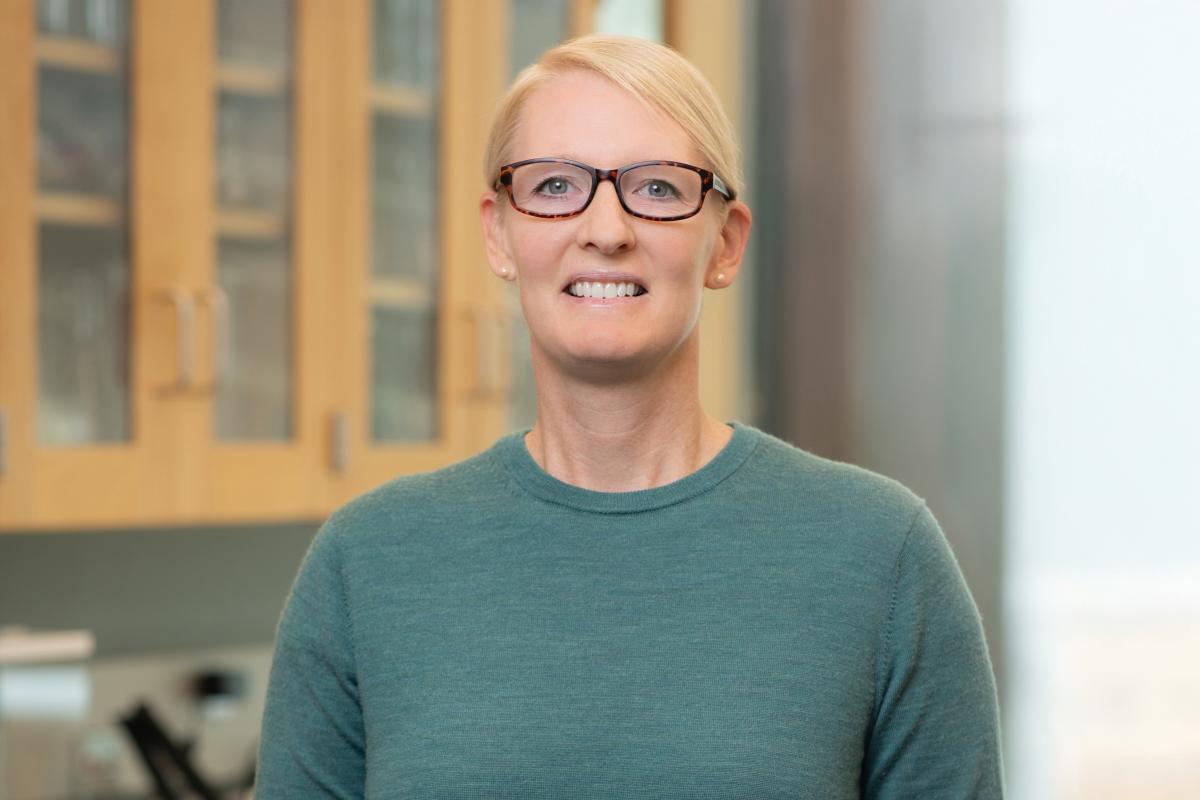
Today, as a professor in Florida State University’s Department of Earth, Ocean and Atmospheric Science, Mason researches how microbes react to disruptions in the marine environment, including oil spills and areas with decreasing oxygen concentrations known as oxygen minimum zones, or OMZs.
Marine microbes — such as bacteria and archaea — are known as ecosystem engineers because they're involved in nearly all marine biogeochemical cycles, making them crucial to ecosystem function. As microbes change due to disturbances in their environment, their role in the ecosystem is affected, which can produce cascading effects on marine health and the food chain.
“With factors like rising ocean temperatures, OMZs are expanding exponentially,” said Mason, who holds a bachelor’s in natural resource conservation from the University of Massachusetts Amherst and a master’s in environmental science from Portland State University, Oregon. “My research allows us to understand how microbes respond to ecosystem perturbations like OMZs so we can understand the full effects these changes have on the ecosystem.”
As part of her doctoral study at Oregon State University, Mason spent two months on the International Ocean Drilling Program research vessel sourcing microbes from the deepest crust sampled at that point — 4,564 feet down in the Atlantic Ocean.