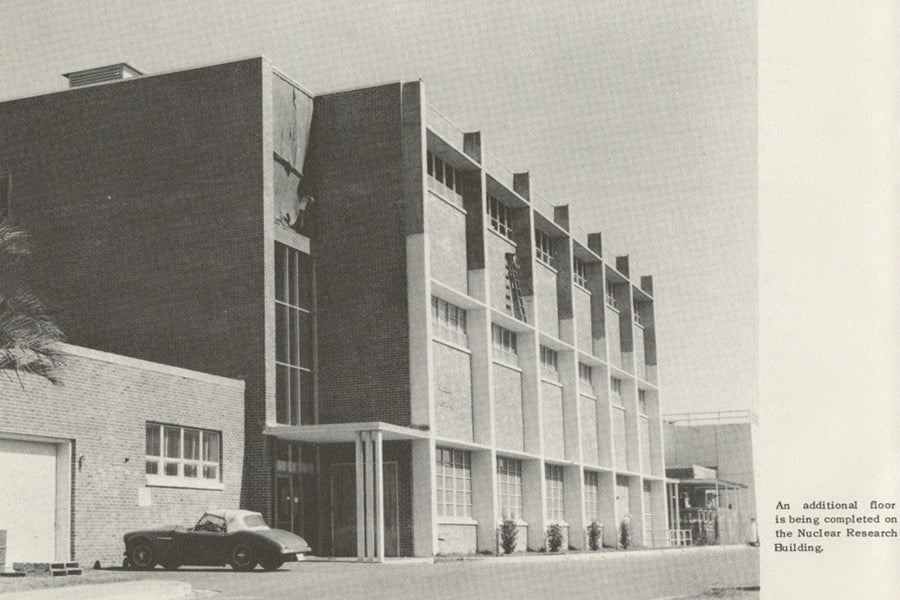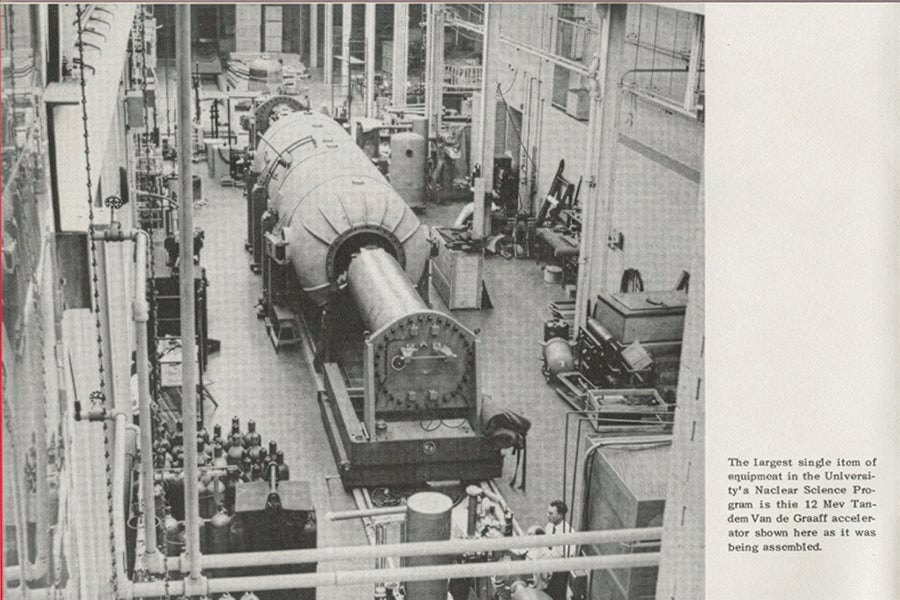

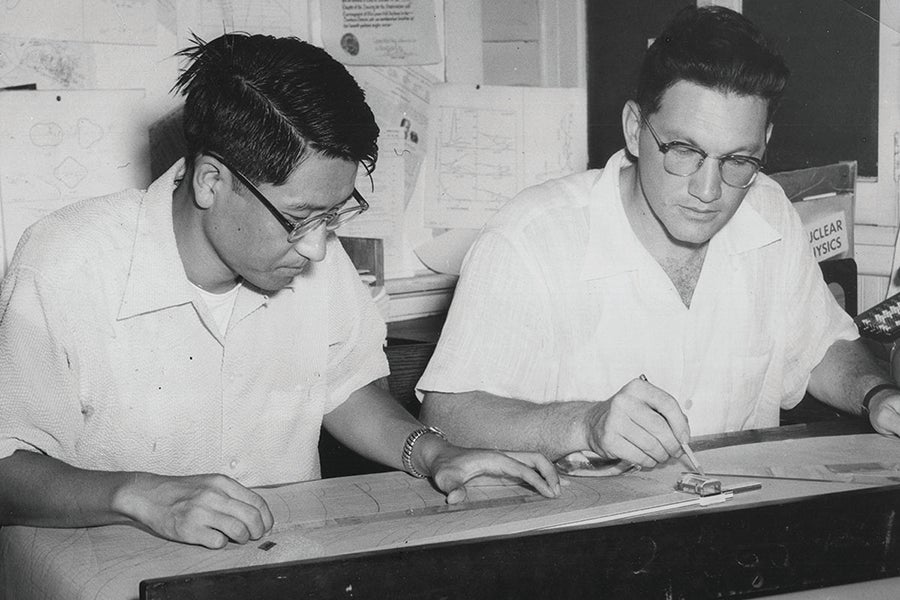
The 1960s were a time of revolution. The U.S. and Soviet Union were locked in competition in the Space Race. The Civil Rights Movement was sweeping the country. In popular culture, the Beatles and Woodstock were transforming music, while a James Bond-fueled spy craze and Mod fashion swept the globe. And in north Florida, science was leaping forward with the construction of a nuclear physics laboratory.
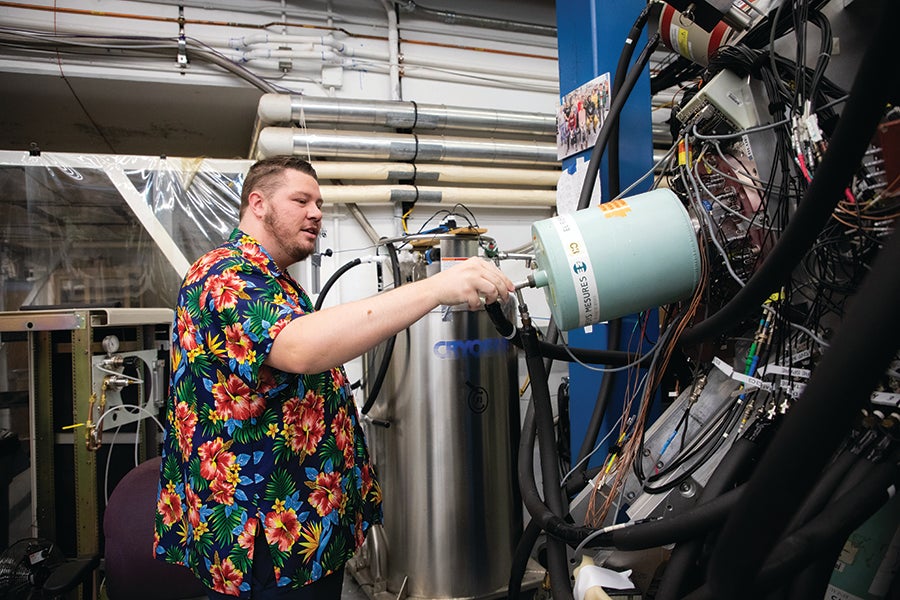
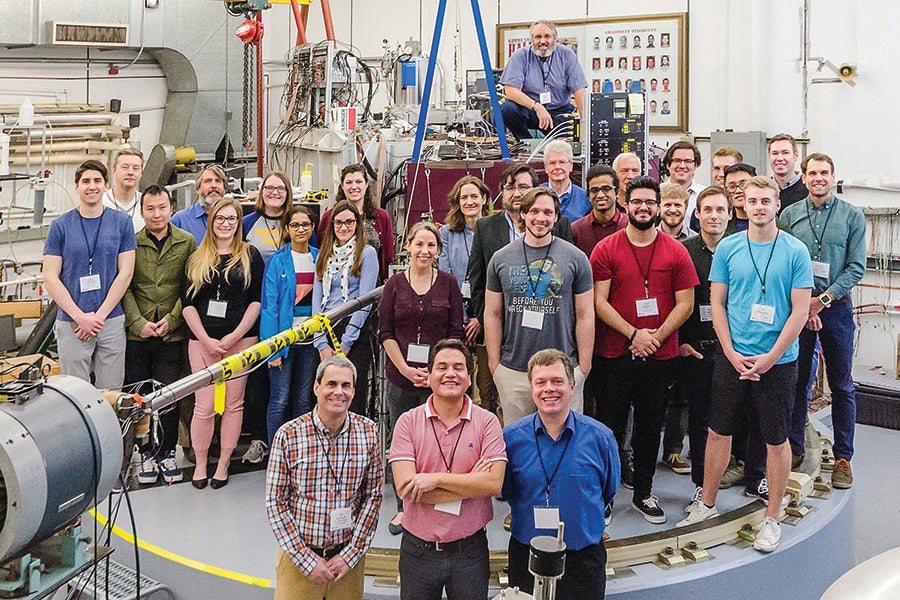
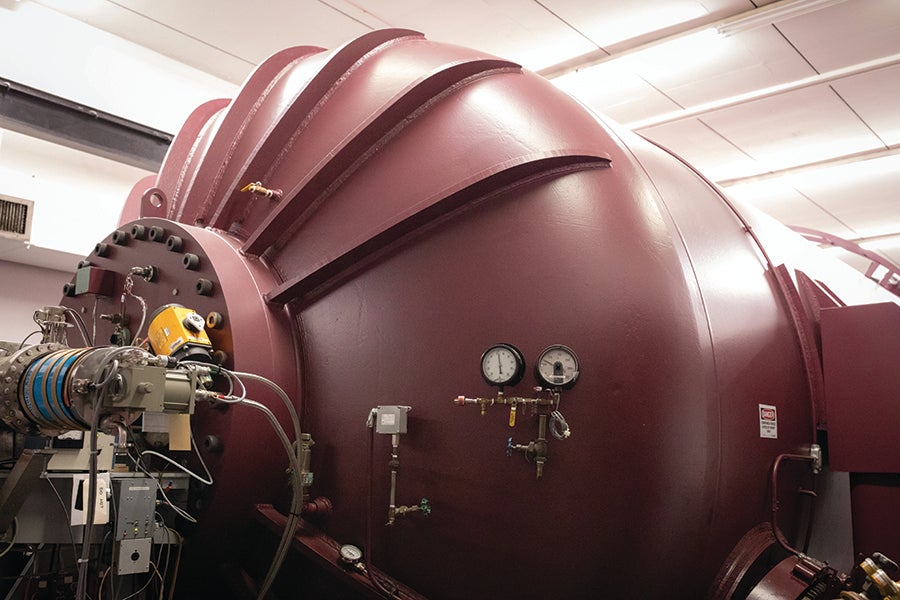
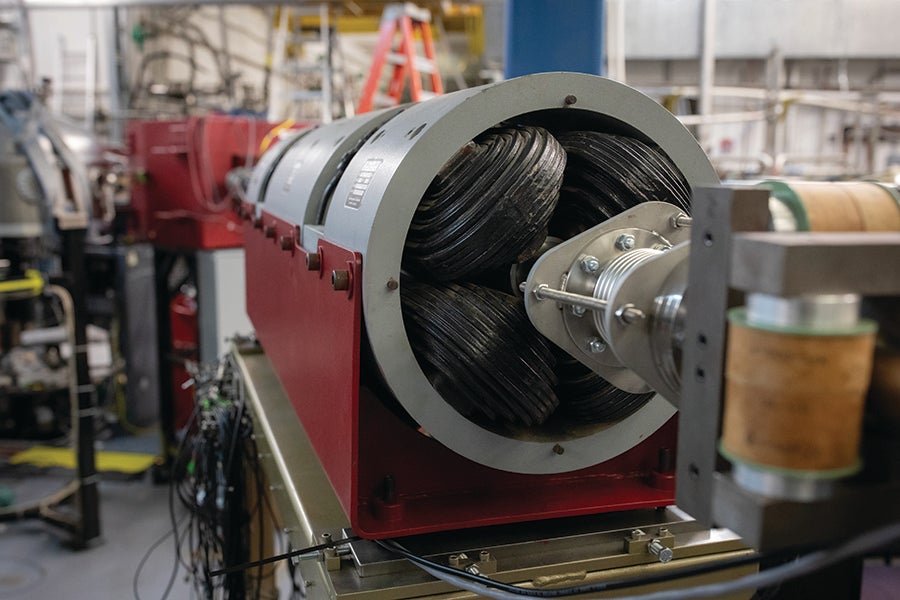
At the Florida State University John D. Fox Superconducting Linear Accelerator Laboratory, physicists study the building blocks of our universe, from stars millions of miles away to the atoms that make up the human body. Since 1960, the Fox Lab’s nuclear structure and nuclear astrophysics scholars have made critical advances in nuclear science by studying the quantum mechanics of atomic nuclei and their reactions, which also supports applications like medical treatments, energy production and storage, national security, and more while preparing tomorrow’s talented scientists for a wide range of work opportunities across varied industries.
“We study the properties and reactions of nuclei that make up the universe, including our bodies and pretty much everything around us, which is essential in understanding how the world came about,” said associate professor of physics Vandana Tripathi, an experimentalist who first joined the lab in 2003 as a postdoctoral fellow. “In the process, we also develop tools and techniques that have a variety of applications like in medicine or security, and we’re training the next generation to tackle future problems.”
Fox Lab researchers use a combination of experimental and theoretical physics to study the abundance of various elements in the universe and investigate unstable nuclei and radioisotopes in naturally occurring elements such as radium and uranium. Research into exotic nuclei can improve technologies in fields including medical imaging, nuclear forensics, nuclear energy, radiotherapy-based cancer treatment, and high-precision industrial measurement.
“Celebrating a 65-year anniversary shows that we’ve been part of the U.S. scientific tradition and culture for a long time. We’re so proud to continue to propel the U.S. forward through science …”
— Ingo Wiedenhöever, Florida State University John D. Fox Superconducting Linear Accelerator Laboratory director
“As a theorist, my goal is to understand my object of study, and the only way to know if I’m making progress is to make predictions that experimentalists can test in the laboratory,” said assistant professor of physics Kevin Fossez, who also holds the U.S. Department of Energy Facility for Rare Isotope Beams Theory Alliance bridge position. “Sometimes, it goes the other way around when experimentalists observe something surprising and ask theorists for interpretations. We spend a significant amount of time discussing and questioning each others' work, and our nuclear group makes a great team.”