
Faculty Spotlight: Eric Shattuck
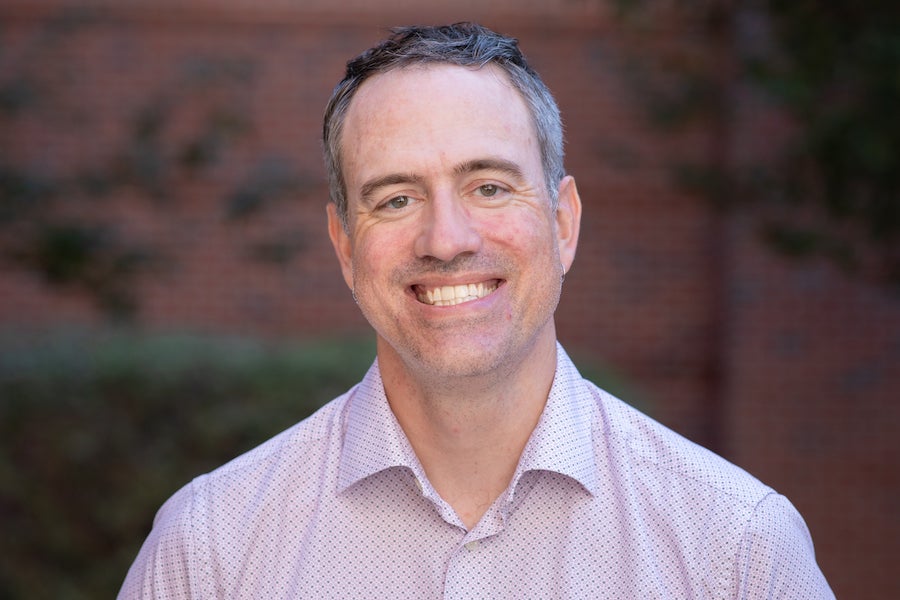
Eric Shattuck is a professor and biological anthropologist in the Department of Anthropology, part of Florida State University’s College of Arts and Sciences. His research centers around evolutionary theory, infectious diseases, health, and immune function in humans across different social and environmental contexts. After earning his bachelor’s in anthropology from the University of Georgia in 2005, Shattuck received his master's in biomedical anthropology from the State University of New York at Binghamton in 2009 and his Ph.D. in biological anthropology from Indiana University in 2015. He joined FSU’s faculty in 2023.
Tell us a little about your background.
I spent most of my childhood in New Mexico until I moved to Georgia during my mid-teens. I then pursued a bachelor’s in anthropology at UGA and continued my studies at SUNY Binghamton, where I earned a master’s in biomedical anthropology, and IU, where I earned my doctorate in biological anthropology. After working in postdoctoral and research positions at the University of Texas at San Antonio, I joined FSU to be part of its growing anthropology department and help reshape its doctoral program.
Can you break down your areas of research for us?
My research focuses on evolutionary medicine, specifically how the human body has adapted to resist certain diseases over time but is still vulnerable to chronic ones and other infections. I study sickness behavior in humans, such as lethargy, social withdrawal and reduced activity. Researching how our bodies conserve energy and respond to infections in contexts of competing demands on our time can help explain why people go to work sick and how that can spread diseases. These processes can have major implications for public health.
What makes you passionate about your research?
The complex relationship between pathogens and their hosts fascinates me, and each day, I discover something new in the lab, in the field or in discussions with students. Observing patterns across species shows how evolution and decision-making have shaped our biology. People often weather sickness for many reasons, like fulfilling work, family or social obligations. Unfortunately, those trade-offs come with consequences for public health. The decision between resting and recovering versus working or caring for offspring can interact with our culture to impact our biology in different ways.
What inspired you to choose your field of study?
I assumed I’d pursue a graduate degree in cultural anthropology. However, after graduating with my bachelor’s, I was drawn to the biological side of the field. I was more interested in how humans respond to sickness, stress, and different environments than in how those factors affect culture. Once I started my master’s and saw how evolutionary theory could help explain real-world health issues, I knew this was the direction I wanted to pursue.
What do you want the public to know about the importance of your research?
Most of how we act while sick is shaped by biology and evolution. How we feel, behave, and decide whether to rest or push through is rooted in the development of our ancestors. Understanding those responses helps us make sense of why diseases spread and why outbreaks look different across communities. My work connects immune function, hormones, behaviors, and environments to give a fuller view of human health; these insights help us build better, more responsive public-health strategies.
What is your favorite part of your job?
I love teaching. Students bring a curiosity and energy that makes every semester different. I enjoy motivating them to discover connections among evolution, behavior and health. Watching students develop their own interests and questions is amazing, and the conversations we have are the most rewarding parts of my day. Seeing students grow as thinkers and scientists keeps me excited about my work.
What is your best memory so far from working at FSU?
My best memories come from the little moments, like conversations with students when they’re excited about a topic and want to learn more.
Joining a department that is expanding has also been a highlight. There’s a sense of momentum on campus, and being part of a team that’s shaping a growing program has made my time here especially rewarding.
Who are your role models?
Carl Sagan, the American astronomer and renowned science communicator, is a huge role model of mine. I was fascinated by the science behind his “Cosmos” documentary series and his ability to make complex ideas and results understandable and exciting, which gets people involved in science and offers a humanistic side to the field.
Another person who is extremely important to me is my friend and colleague Dan Benyshek, who recently passed away. He was a biological anthropologist at the University of Nevada, Las Vegas. He embodied many values that are important to me, including a humanistic outlook. He was kind, cared deeply for his students and colleagues, and handled his diagnosis with a kind of grace I found inspiring. I’ve been looking to him as inspiration for being a scholar and professor grounded in seeing each individual student, showing them care and empathy, and recognizing the unique histories and paths that shape who they are.
Do you have any exciting upcoming projects or goals you’re working toward?
I’m continuing my research in Jalisco, Mexico, studying how environmental and social conditions affect immune function. We finished our first data collection last spring and are currently analyzing the findings and drafting publications while also planning the next phases of the project with our Mexican colleagues. As the department grows, I’m excited to introduce more students to fieldwork and lab research, giving them hands-on experience and building a stronger foundation for our doctoral program.
If your students only learned one thing from you, what would it be?
Human biology is intertwined with cultures, behaviors and environments; nothing about health or illness happens in a vacuum. If my students can approach problems knowing there’s a complex explanation rather than a simple one, they’ll be prepared for whatever field they enter.
I want them to stay curious, ask good questions, and be thoughtful about how science connects to people’s lives.