
Faculty Spotlight: Will Hanley
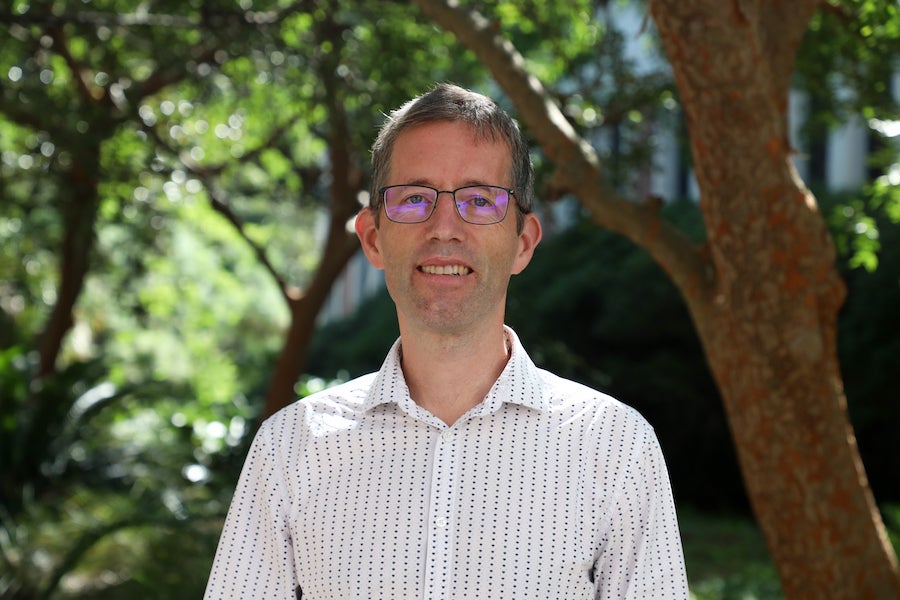
Will Hanley is an associate professor in Florida State University’s Department of History, part of the College of Arts and Sciences, and a 2025 Mohamed Ali Foundation Fellow at Durham University in England. The competitive international fellowship supports scholars conducting original research in the Abbas Hilmi II Papers, an archival collection at Durham documenting the reign and exile of Egypt’s last ruling khedive, an Ottoman-appointed viceroy deposed during World War I. The collection offers insight into a transformative period in Egyptian history and East-West relations. Hanley’s research examines Egypt’s role in global systems and the development of international law, themes central to his forthcoming book, “Cairo, Capital of International Law.” Hanley is also involved in digital humanities research, including a project digitizing the full content of the “Egyptian Gazette” from 1904-1909. Each year, he teaches a course in which students contribute directly to the project. Published in English in Alexandria during the British occupation, the Gazette documented political, legal, and social life at a pivotal moment in Egypt’s history.
Tell us a little about your background, where you’re from, and what brought you to FSU.
I’m from Saskatchewan, Canada, where I lived on a farm without electricity or running water until I was 12. My childhood informs how I think about the past. I earned a degree in history and geography from the University of Saskatchewan in 1996, followed by master’s degrees in modern Middle East studies and religion from the University of Oxford in 2000 and 2001. I earned my doctorate in history in 2007 from Princeton University and came to FSU in 2008 after being offered a position in the Department of History.
What inspired you to choose your field of study?
When I was 18, I joined an exchange program called Canada World Youth and spent seven months living with young Tunisians, including time in a village in western Tunisia. I was fascinated by the language and culture and wanted to continue learning more about the Arab world.
Can you break down your areas of research for us?
Historical writing often privileges elites, making it difficult to uncover the lives of ordinary people. Legal records are among the best sources for this purpose. I take a socio-legal approach to the history of Egypt in the late 19th and early 20th centuries, using legal archives to explore social questions beyond courts and lawyers’ offices. For example, I examine how laws governing business, lending, and debt shaped labor systems in Egypt and influenced the daily lives of factory and farm workers during the British occupation. I also study how legal regulations structured urban life, including where people walked and who was held responsible when pedestrians were injured by trains, carts or early automobiles. My first book, “Identifying with Nationality: Europeans, Ottomans, and Egyptians in Alexandria,” published in 2017 by Columbia University Press as part of the Columbia Studies in International and Global History series, examines how legal categories of nationality, such as Egyptian, American, or French shaped everyday life in turn-of-the-century Alexandria.
What do you want the public to know about the importance of your research?
Comparative thinking reveals blind spots in any national perspective. My research on Egypt during an era of imperialism and inequality highlights truths we might otherwise miss. My first book argues that citizenship discrimination is much like racial discrimination. My current project examines how the authority of law is built and financed by ordinary people, including those who rarely see a courtroom. These dynamics often become clearer when viewed through the lens of a different country’s history.
You’re currently working on your book, “Cairo, Capital of International Law.” What can readers expect from this project? How does this project contribute to your research and work at FSU?
The book investigates legal work in Egypt from the 1860s to the 1930s, when the country was a global center of mixed jurisdiction. I argue that we should look beyond public questions of international law, such as diplomacy, war crimes and the United Nations, and instead examine private matters like property, profit, marriage and inheritance. These issues formed the mainstream of international law and were often its most lucrative dimension. I bring this perspective into my legal history courses and have published related datasets for other researchers.
What is your best memory so far from working at FSU?
I feel privileged to be part of my students’ search for meaning. Each student’s personality emerges when they think deeply, and I value the opportunity to engage with so many thoughtful young people.
Who are your role models? Are there certain people who have influenced you most in your life and career?
Every individual has a unique intellectual style, and I believe our goal should be to cultivate our authentic selves rather than follow a single role model. I’ve been influenced by exceptional teachers, especially those who equipped students to discover knowledge independently. Khaled Fahmy, professor of history at Tufts University, and Michael Cook, class of 1943 university professor of Near Eastern studies, emeritus, at Princeton University, trained me to read Arabic archival documents with confidence and imagination.
Do you have any exciting upcoming projects or goals you’re working toward?
I’ll be publishing a lesson about how to use Wikidata, a free, collaboratively edited research database, on Programming Historian, an open-access platform that teaches digital research methods. I’m enthusiastic about computational methods because they allow historians to map relationships between people, places, and institutions across large archival collections, especially when working with ambiguous or incomplete records. I’m working to make them a larger part of my scholarship.
If your students only learned one thing from you, what would you hope it to be?
I hope students become comfortable with knowledgeable uncertainty. Even with strong evidence, claiming absolute certainty can be inappropriate and sometimes harmful. Historical interpretation is a creative practice that every human should pursue as a civic duty.