
Student Spotlight: Kylie White
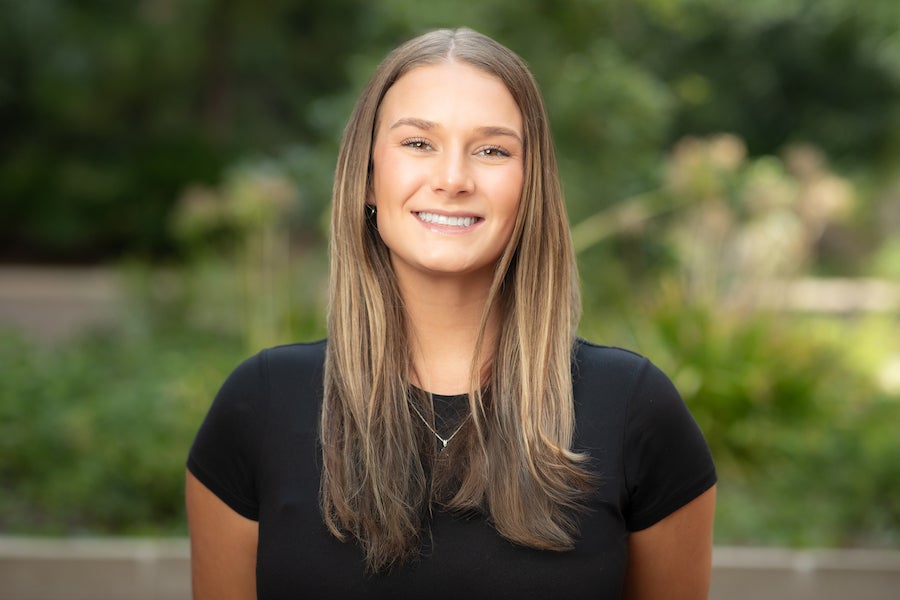
Kylie White is a senior pursuing a degree in psychology through Florida State University’s Department of Psychology, part of the College of Arts and Sciences. She’s also a decorated Air Force ROTC cadet through the FSU Aerospace Studies and Detachment 145 and served as chief of staff for the 145th Cadet Air Task Force for Fall 2025. White was also recently selected for the USAF Helicopter Training Next program, a branch of the highly competitive Undergraduate Pilot Training program within the U.S. Air Force, upon her graduation and commissioning as a second lieutenant in the Spring of 2026.
Tell us a little about your background, where you’re from, and what brought you to FSU.
I was born and raised in Clearwater, Florida. I’m fortunate to have grown up in an area that allowed me to explore a variety of interests, including volleyball. When it came time to choose a university, FSU stood out for several reasons. It’s the perfect distance from my hometown, it has a strong AFROTC program, the campus is absolutely beautiful, and it allows me to stay connected to the athletic activities I love.
What inspired you to pursue a degree in psychology?
I’ve always been interested in how people think, what motivates them, and how their behavior is shaped by different environments. Psychology allows me to explore these personal interests while also preparing me to be a more effective leader in the Air Force. Understanding people is at the heart of leadership, so psychology felt like a natural fit.
What’s something people don’t know about studying psychology?
Psychology covers a wide scope of concepts regarding the human mind. It covers everything from neuroscience to social behavior, and much of it is research-driven. The topics discussed in my lectures over the past few years have really stuck with me, and I’ve even found myself applying lessons from psychology to everyday occurrences in my life.
Tell us about your leadership role in AFROTC.
As the 145th Cadet Air Task Force chief of staff, I oversee coordination among different cadet leaders to ensure training runs smoothly and communication stays clear. The role requires organization, teamwork and adaptability, all skills I’ve refined through my role in AFROTC and while playing on FSU’s Women’s Club Volleyball team.
In AFROTC, I’ve learned discipline, time management, and how to stay relaxed in stressful situations. On the volleyball court, I’ve strengthened my communication skills, built trust with my teammates, and learned how to adjust quickly in fast-paced play. In both settings, success comes from working together and putting the team first. Being chief of staff means ensuring the success of everyone, not just myself.
Tell us about being accepted for pilot training. What does this prestigious opportunity mean to you?
I recently found out that I was selected for the USAF Helicopter Training Next program, which I’m very excited about because it’s been a goal of mine for a while. Being selected is an incredible honor and the result of years of hard work and dedication that I’ve put into AFROTC and my academics. Flying has always been a dream of mine, and to know that I’ll have the opportunity to serve my country doing what I love is both humbling and motivating. I see it not just as a personal achievement but as a responsibility to give my best in training and as a future officer. I can’t thank my family, friends, classmates, and instructors enough for the support they’ve given me during my pursuit of this career field.
What aspect of psychology do you find most rewarding?
The most rewarding part is being able to apply what I learn in the classroom to real situations — whether it’s supporting my friends and family, identifying which cadets are struggling in AFROTC and how best to help them, or building stronger bonds with my teammates in volleyball. Psychology provides me with insights on how to help people work better together and adapt to stressful training environments, which has also helped me grow as an individual and a leader. I love seeing how those lessons translate into everyday leadership experiences and relationships.
Are there any faculty or staff who have helped or inspired you?
I’ve had amazing support from the AFROTC cadre. The three who stand out to me are AFROTC commander Col. Ogle, education officer Capt. James McMaster, and enlisted instructor Master Sgt. Philip Gordon. They’ve all modeled servant leadership, and I wouldn’t be at this point in my career without their help and support.
What on-campus resources have helped you achieve success?
The AFROTC program itself has been one of my primary resources, providing me with leadership and character development, mentorship and lifelong friends. Academically, resources like the Robert Manning Strozier Library, tutoring centers, and study groups have been helpful throughout the past four years. I’ve also benefited from Campus Recreation’s sports clubs; being able to continue playing the sport I love has given me a great outlet in the times when I’ve struggled in other aspects of life.
What are some current goals or projects that you’re working on?
My main goal is to stay on top of my coursework and finish strong so I’m ready to commission as an officer in May. I’ve been focusing on getting as prepared as possible for my pilot training opportunity as well.
Following your graduation, what are your plans? Even though you might miss FSU, what are you looking forward to once you graduate?
After graduation, I’ll commission as a second lieutenant with the USAF and attend helicopter pilot training in Alabama. While I’ll definitely miss the FSU community, AFROTC, and playing volleyball with my teammates, I’m extremely excited to take the next step in my career. I look forward to the challenge of applying everything I’ve learned over the last five years here at FSU in the real world.