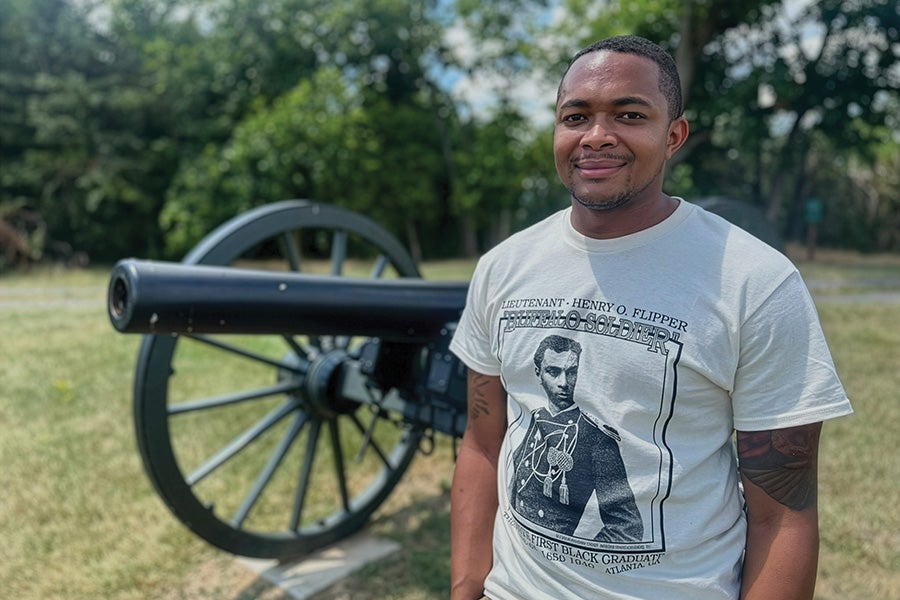

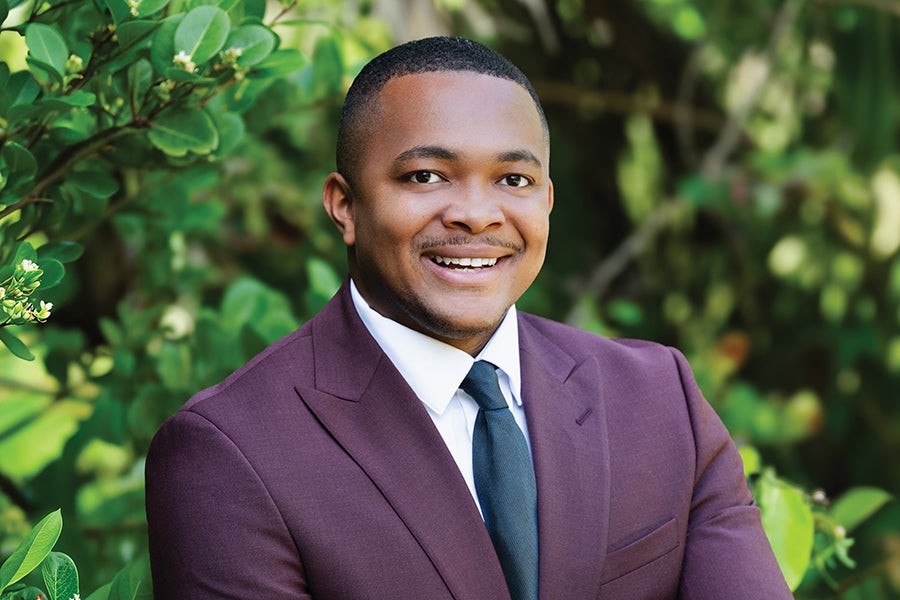
Brian Davis Jr. is doing one of his favorite things: combing through mementos from his uncle’s time serving in the U.S. Marine Corps during the Vietnam War. There’s his uniform, the Purple Heart he was awarded for being wounded in action, and the copy of his original enlistment contract.
The personal experiences of his family members affected by war have been a fascination for Davis since childhood. Now, as a Florida State University history doctoral candidate, his research centers on war and society, focusing on the people, memories, and artifacts that inform our understanding of conflict.
“Wars don’t just affect soldiers; they transform entire societies, affecting civilians on the homefront and many other aspects of daily life,” Davis said. “Wars have created new opportunities to challenge racial or gender hierarchies, as illustrated during World War II when women assumed roles traditionally held by men. These shifts not only altered daily life but also helped shape broader political, social, and economic developments in the United States, highlighting the role of ordinary people in driving historical change.”
Davis, a first-generation college student, earned his bachelor’s in history from Winston-Salem State University in North Carolina in 2019 and a master’s in history from FSU in 2022. He studies Black military service during the Cold War, from the end of WWII and through the dissolution of the Soviet Union in 1991, and he focuses on the intersections of the struggle for racial equality and military experiences.