
Accelerating Excellence

FSU nuclear physics laboratory celebrates 65 years of leading science through innovation

Thu, 01/15/26
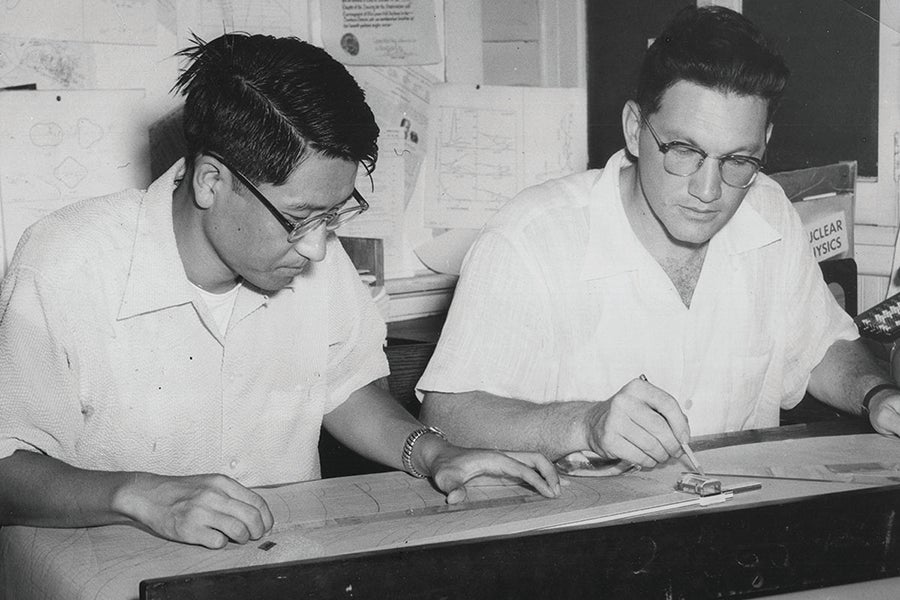
Nuclear physics student Kuick Lee and nuclear theorist Alex Green.
Nuclear physics student Kuick Lee and nuclear theorist Alex Green. Photo courtesy Florida Memory and FSU's Digital Research Repository.

The 1960s were a time of revolution. The U.S. and Soviet Union were locked in competition in the Space Race. The Civil Rights Movement was sweeping the country. In popular culture, the Beatles and Woodstock were transforming music, while a James Bond-fueled spy craze and Mod fashion swept the globe. And in north Florida, science was leaping forward with the construction of a nuclear physics laboratory.

At the Florida State University John D. Fox Superconducting Linear Accelerator Laboratory, physicists study the building blocks of our universe, from stars millions of miles away to the atoms that make up the human body. Since 1960, the Fox Lab’s nuclear structure and nuclear astrophysics scholars have made critical advances in nuclear science by studying the quantum mechanics of atomic nuclei and their reactions, which also supports applications like medical treatments, energy production and storage, national security, and more while preparing tomorrow’s talented scientists for a wide range of work opportunities across varied industries.

“We study the properties and reactions of nuclei that make up the universe, including our bodies and pretty much everything around us, which is essential in understanding how the world came about,” said associate professor of physics Vandana Tripathi, an experimentalist who first joined the lab in 2003 as a postdoctoral fellow. “In the process, we also develop tools and techniques that have a variety of applications like in medicine or security, and we’re training the next generation to tackle future problems.”

Fox Lab researchers use a combination of experimental and theoretical physics to study the abundance of various elements in the universe and investigate unstable nuclei and radioisotopes in naturally occurring elements such as radium and uranium. Research into exotic nuclei can improve technologies in fields including medical imaging, nuclear forensics, nuclear energy, radiotherapy-based cancer treatment, and high-precision industrial measurement.

Celebrating a 65-year anniversary shows that we’ve been part of the U.S. scientific tradition and culture for a long time. We’re so proud to continue to propel the U.S. forward through science …

Ingo Wiedenhöever, Florida State University John D. Fox Superconducting Linear Accelerator Laboratory director

“As a theorist, my goal is to understand my object of study, and the only way to know if I’m making progress is to make predictions that experimentalists can test in the laboratory,” said assistant professor of physics Kevin Fossez, who also holds the U.S. Department of Energy Facility for Rare Isotope Beams Theory Alliance bridge position. “Sometimes, it goes the other way around when experimentalists observe something surprising and ask theorists for interpretations. We spend a significant amount of time discussing and questioning each others' work, and our nuclear group makes a great team.”
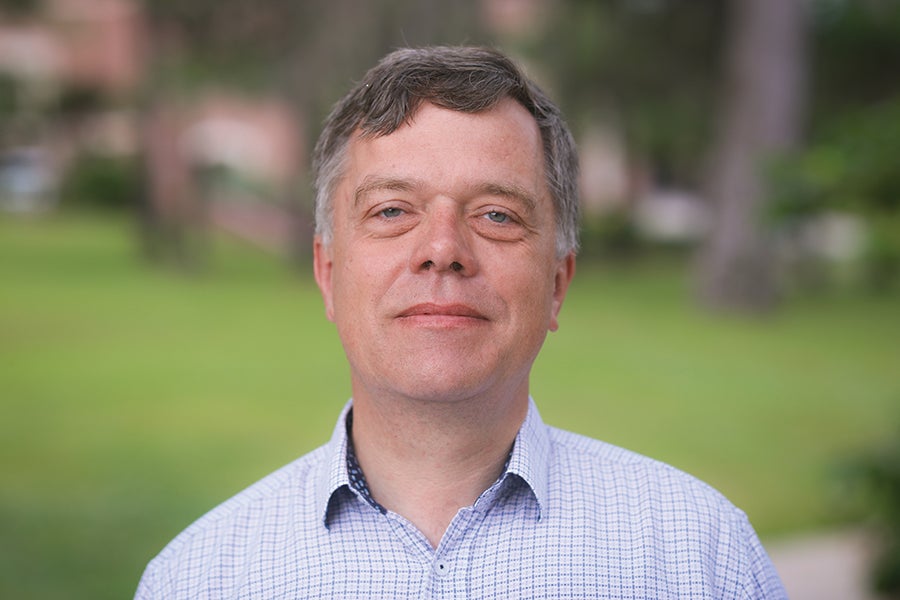
Ingo Wiedenhöever, Florida State University John D. Fox Superconducting Linear Accelerator Laboratory director.
Ingo Wiedenhöever, Florida State University John D. Fox Superconducting Linear Accelerator Laboratory director. Photo by Devin Bittner.

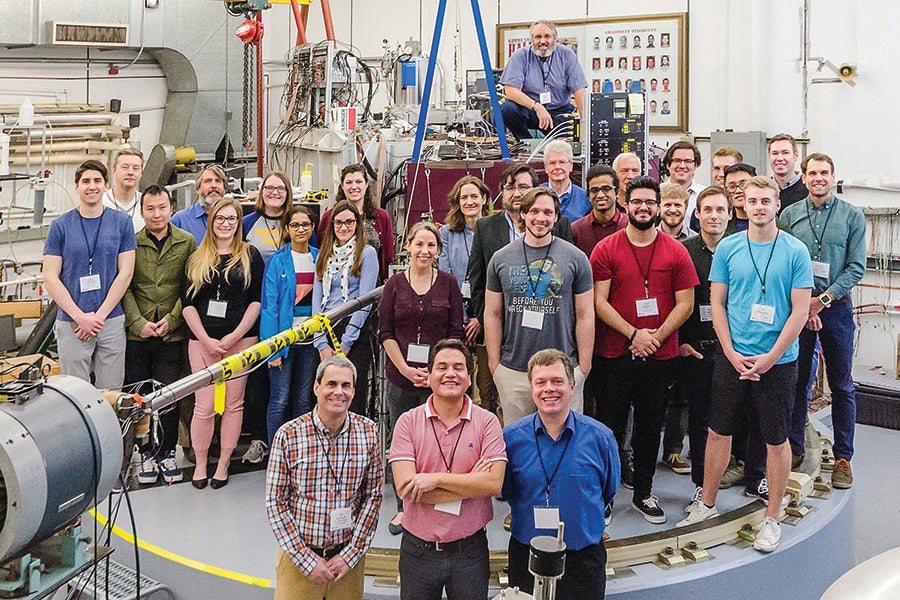
In the Fox Lab, students call their professors by first name, and on any given day, you can find a group of nuclear physicists — students or faculty — enjoying lunch together outside the Keen Building on FSU’s Tallahassee campus. This open, collegial environment, combined with advanced preparation through research and training, produces sought-after graduates who go on to succeed in nuclear physics roles in industries and laboratories around the globe.

“The most important outcome of our work is by far our students — nearly 200 doctoral graduates since the lab’s inception is a tremendous contribution to the nation, and our students are in high demand due to their technical training and expertise,” said Department of Physics chair Paul Cottle. “We’re one of the few labs that allows graduate students to get hands-on experience in building, maintaining and using these technologies.”

In past the 15 years alone, the lab has secured nearly $25 million in external grant funding, continuing the support the lab has received from the National Science Foundation, DOE, State of Florida, and FSU over the decades.

We spend a significant amount of time discussing and questioning each others' work, and our nuclear group makes a great team.

Kevin Fossez, assistant professor of physics

“This lab has produced, and still hosts, some of the major titans of nuclear physics,” said doctoral candidate Jake Davis. “It’s an incredible tool to do the science I want, which focuses on developing a better understanding of fission through gamma ray spectroscopy. Everyone here is so welcoming, and we’re all figuring out these complex and sometimes frustrating systems with smiles on our faces." 

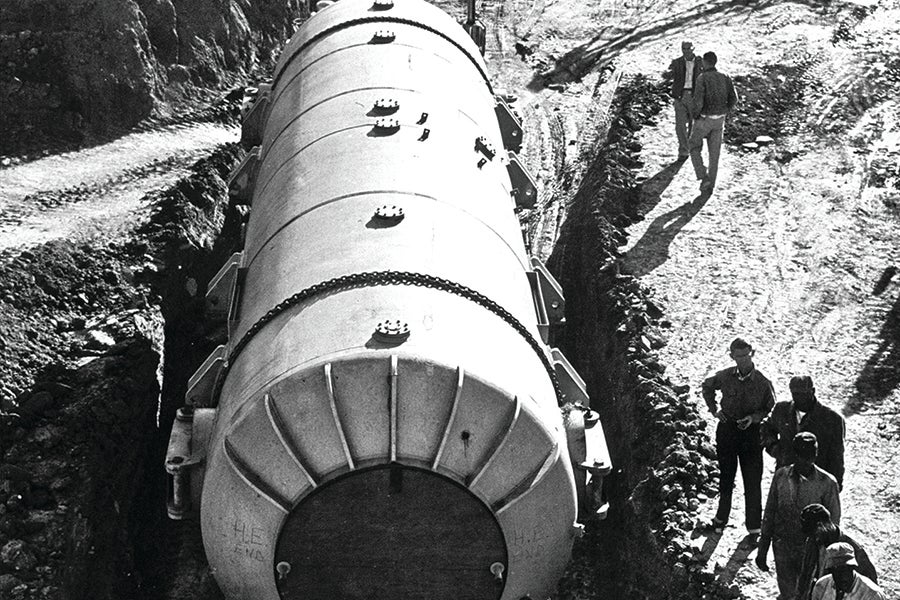
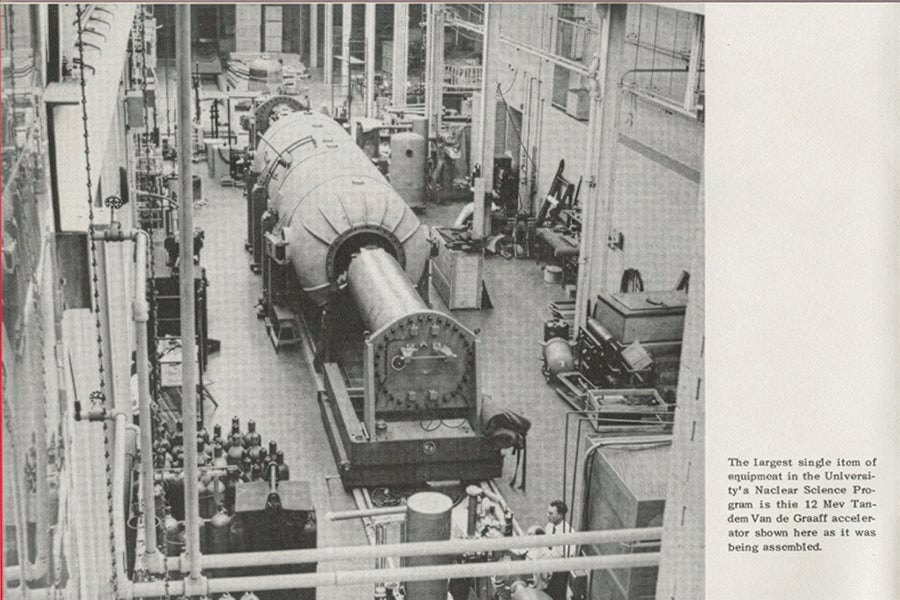
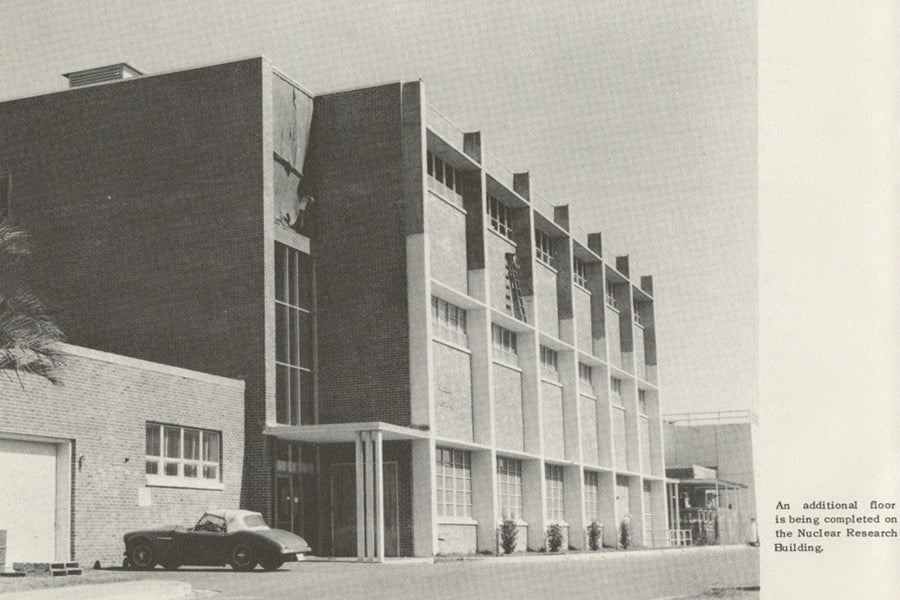
FSU’s nuclear physics program was established in 1958 by Alex Green, a nuclear theorist who proposed a collaboration among the university, the state, and the federal government to make Florida a key player in nuclear science research. With the support of then-Governor LeRoy Collins, what became the Fox Lab opened in 1960 as the FSU Accelerator Laboratory after the installation of an EN tandem Van de Graaff accelerator, only the second in the world.

John Fox, the lab’s eventual namesake, joined not long after its doors opened.

“John was a research physicist through and through,” said Georgianna Vines, Fox’s widow. “He was very close to FSU lab faculty who were there at the time of his retirement around 1994, and he often spoke about how proud he was that former Governor Collins was responsible for the lab. The lab was named after John just before he passed in 2007.”

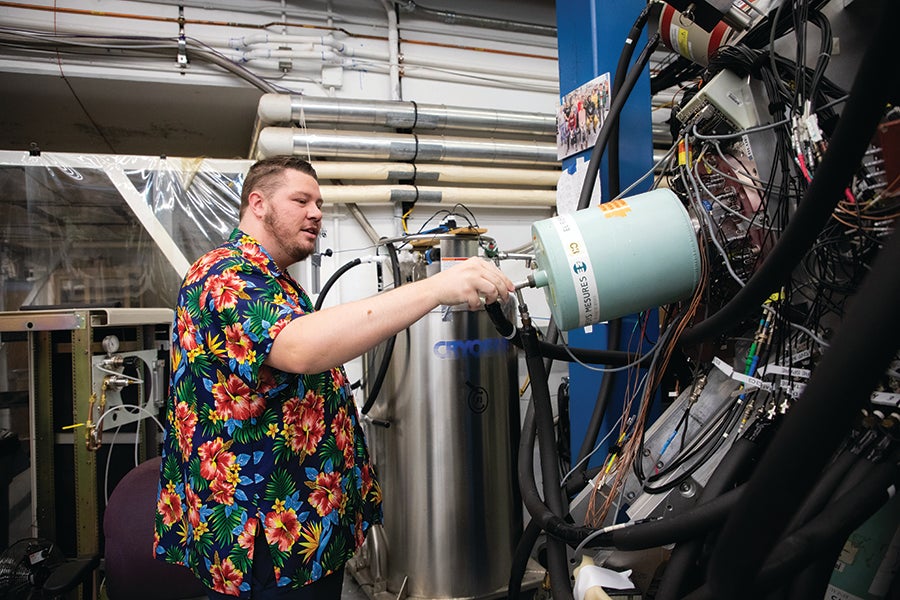
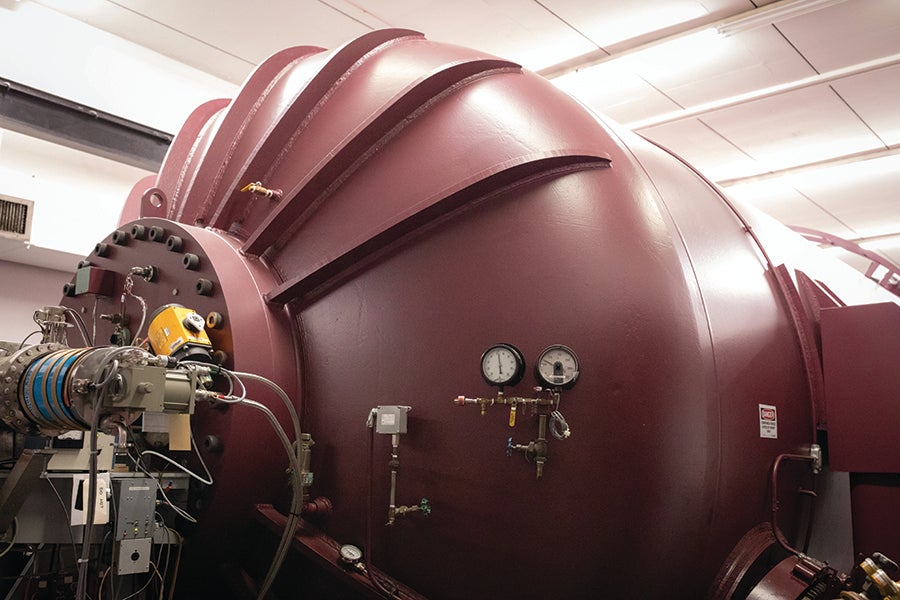
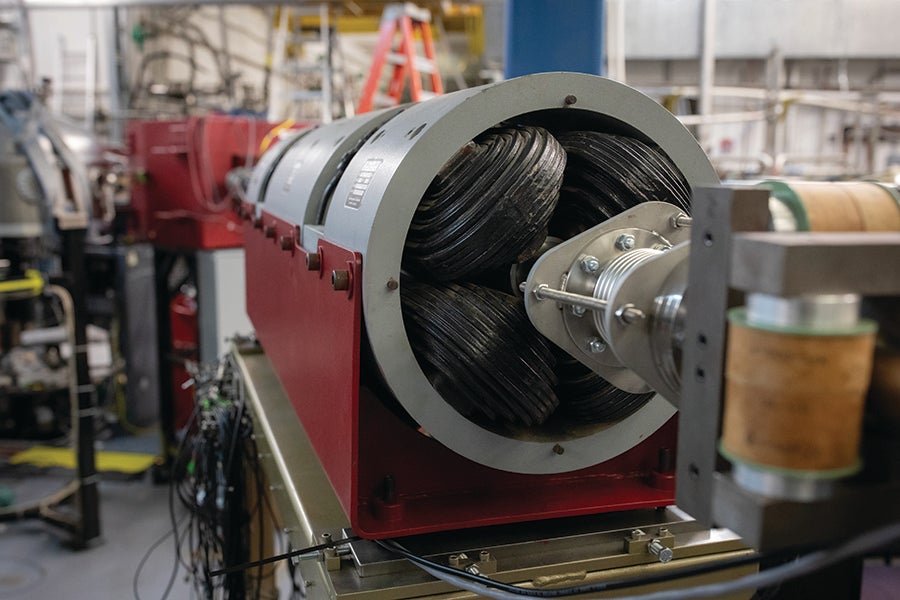
Today, more than six decades after the lab’s founding, students and faculty utilize advanced detector systems, a radioactive beam facility, the Van de Graaff and superconducting Linac accelerators, nuclear spectroscopy setups, and more instruments that the lab has accumulated through continuous funding.

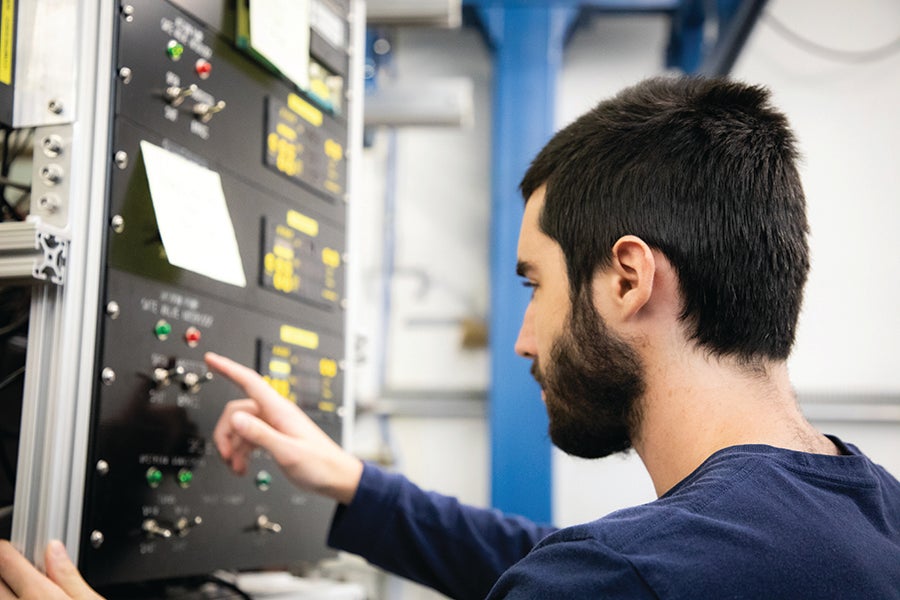
And while it’s home to nuclear physicists, the lab can’t function with scientists alone — it also requires a skilled staff of designers, engineers, technicians, and others to keep it humming along, especially since graduate students often work overnights and into the wee morning hours recording data, requiring instrument maintenance and new testing materials.

“I produce target materials for experiments, and I design, maintain, and oversee the construction of vacuum systems,” said technical research designer Powell Barber, who joined the Fox Lab after earning his bachelor’s in physics from FSU in 1991. “As I approach retirement, I’m incredibly grateful to John for playing a key role in developing this special place that has given me such a wonderful career. The lab and culture he helped create produces world-class research, is respected by many around the world, and under its current leadership is ardently expanding its research capabilities.”

This lab has produced, and still hosts, some of the major titans of nuclear physics. Everyone here is so welcoming, and we’re all figuring out these complex and sometimes frustrating systems with smiles on our faces.

Jake Davis

Fox Lab is part of the Center for Excellence in Nuclear Training and University-Based Research, or CENTAUR, a multi-institutional effort supported by DOE’s National Nuclear Security Administration that fosters basic research in low-energy nuclear physics and workforce development.

“One of our most impressive accomplishments is that we’ve had six successful generations of faculty come through this lab, all producing incredible scholars that become leaders around the world,” said emeritus professor of physics Kirby Kemper, who joined the lab in 1968 as a postdoctoral fellow and later served as Fox Lab director and FSU’s Vice President for Research. “My children say I’ve failed retirement because I still come into the lab every day — my hobbies include watching data come in with students and watching them figure out what’s happening in their experiments.”

The lab is also a founding member of the Association for Research with University Nuclear Accelerators, a consortium organized by current lab director and physics professor Ingo Wiedenhöever. ARUNA supports and represents more than a dozen university nuclear accelerator labs across the country to amplify contributions as these entities compete and collaborate with federally funded national labs like Argonne National Laboratory in Illinois and the Facility for Rare Isotope Beams in Michigan.

“Celebrating a 65-year anniversary shows that we’ve been part of the U.S. scientific tradition and culture for a long time,” Wiedenhöever said. “We’re so proud to continue to propel the U.S. forward through science, and we’re very happy to prepare our graduate students to go out and advance nuclear physics everywhere they go — that’s the greatest joy of being at the lab and at FSU.”

McKenzie Harris is a two-time FSU alumna who earned a master’s degree from the College of Communication and Information in 2022 and a bachelor’s degree from the Department of English in 2020.