
Faculty Spotlight: Tim Stover
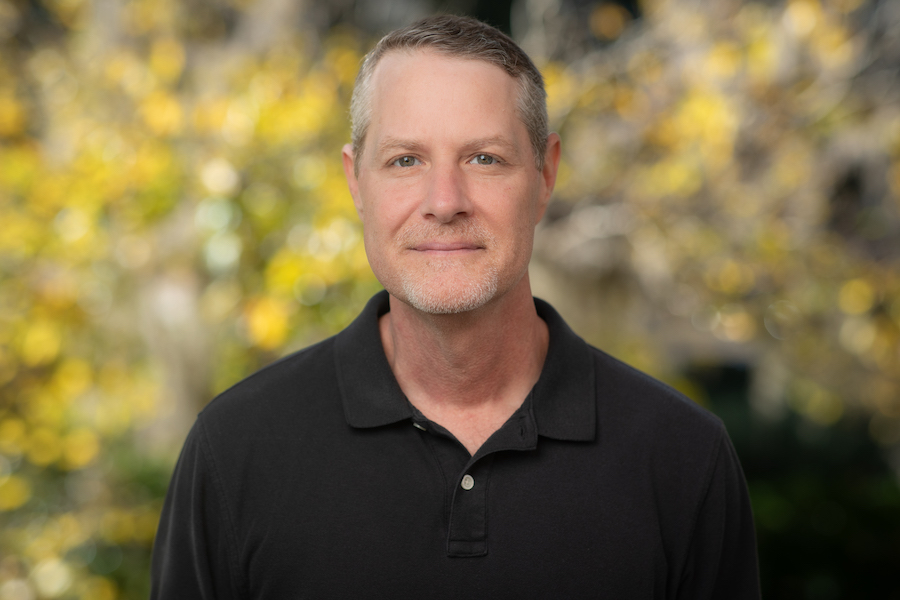
Tim Stover is a professor and chair of Florida State University’s Department of Classics, part of the College of Arts and Sciences. He’s also a two-time FSU alumnus who returned to the university in 2006 as a faculty member, specializing in Latin poetry with a focus on epic poetry and Senecan tragedy, genres of literature that examine the challenges and moral uncertainties of the Roman Empire. Stover’s research appears in his latest book, “Valerius Flaccus and Imperial Latin Epic,” published by Oxford University Press in 2023. Throughout his career, Stover has earned multiple teaching honors from FSU, including the Undergraduate Teaching Award in 2010, the Transformation through Teaching Award in 2011 and the Graduate Teaching Award in 2016.
Tell us a little about your background, where you’re from and what brought you to FSU.
I grew up just a few hours from FSU in Pensacola, Florida, and initially came to the university in the early 1990s. I earned my bachelor’s degree in humanities in 1994, followed by a master’s degree in classics in 1997. I went on to pursue my doctorate in classics at the University of Texas at Austin, completing it in 2006. When I returned to FSU as a faculty member that same year, it felt like coming home.
Can you break down your areas of research for us?
My teaching and research focus on Latin poetry, especially epic poetry. Epic poems — such as the “Aeneid,” written by the ancient Roman poet Virgil — are long narratives that explore identity, politics and culture, offering an excellent window into Roman society and how Romans understood their world. The “Aeneid” follows a Trojan hero on his journey to Italy and the mythical foundations of Rome. Epic poetry was considered one of the most important genres in the ancient world, so many of these poems were preserved. This gives us plenty of material to study closely.
What inspired you to pursue classics?
I’ve been interested in history and literature from an early age, and that passion intensified as I transitioned to my college studies. I initially planned to study 19th-century European history but quickly realized I needed a stronger understanding of Europe’s classical past. After taking classics courses with phenomenal professors at FSU, I developed a deep desire to become an expert on the ancient world.
What do you want the public to know about your research?
While the study of classics can be challenging because the evidence is often fragmentary or difficult to interpret, it offers enormous intellectual and spiritual benefits. It sharpens the mind and puts us in touch with our humanity, making us more perceptive and empathetic. While my focus is on ancient Rome, engaging with classics gives us tools to better understand the cultural, political, and literary developments that have shaped Western history long after antiquity while also offering a solid foundation for making sense of the world more broadly.
How has presenting your research at major conferences influenced your scholarship and teaching?
Presenting at major conferences has significantly shaped my thought process. The exchange of ideas among colleagues and with audience members often leads to important points that make me rethink or nuance my views, which sharpens my work. My favorite thing about attending conferences is interacting with graduate students from around the world. The passions and new insights they bring to the table always reenergize me. I typically return from conferences with new ways of approaching material and a renewed sense of purpose that I carry into the classroom.
Tell us about your role as the department chair of classics.
Leading the FSU department that opened so many doors for me as a student has been one of the most rewarding experiences of my life. I sometimes find it hard to believe. Although it can be stressful, I have a great team of people around me to help me manage, and it’s very rewarding to help my colleagues achieve their goals.
Who are the role models or mentors that stand out in your career?
I was very lucky to have had amazing teachers and mentors when I was a student. At FSU, Daniel Pullen, classics professor emeritus, and Jeff Tatum, former FSU professor and chair of the Department of Classics, stand out as particularly exceptional. I took a class from Pullen in my first semester at FSU, and it was transformational. Tatum supervised me as a master’s student, and it was his encouragement that convinced me I could make a career out of classics. At Texas, former professor Karl Galinsky, who supervised my dissertation, was an amazing mentor as well.
What’s your favorite part of teaching and mentoring?
My favorite part of my job is getting to inspire and support my students the same way I was inspired by my teachers and mentors. It’s gratifying and humbling to be able to help others achieve their goals.
What are some upcoming projects you’re currently working toward?
I’m currently writing an article on Claudian, an ancient Roman poet known for blending politics and mythology into his narratives, revealing how rapidly the Roman Empire was changing at the time. I’m also conducting research on “Flavian Epic,” a kind of Latin poetry written during the Flavian dynasty, a period marked by political restoration and major cultural growth. These epics are known for having dramatic and adventurous narratives. Finally, I’m examining the tragic playwright Seneca, whose tragedies explore themes of power, fate and moral struggle.
Together, these projects allow me to continue exploring how Roman writers used storytelling to understand the world around them.
If your students only learned one thing from you (though hopefully they learn much more than that), what would you hope it to be?
FSU is the right place to pursue your dreams and discover what you’re truly capable of. The journey takes dedication and hard work, but there’s no limit to how far you can go from here.