
Why it matters
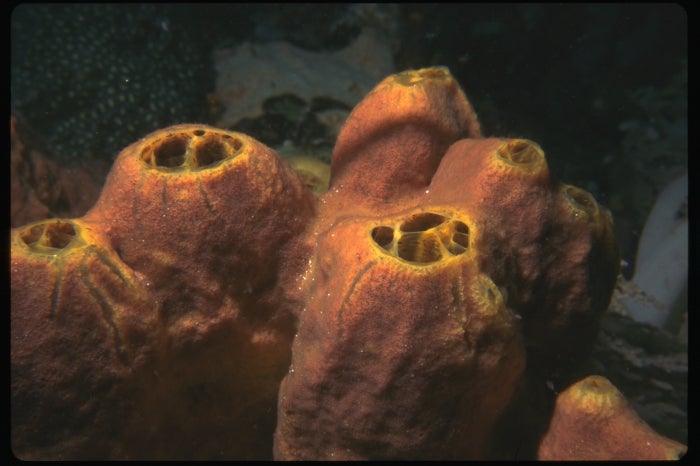
Whether as a drug molecule or a natural product, the precise molecular geometry is critical for interacting with the target protein. The first syntheses of tetradehydrohalicyclamine B and epi-tetradehydrohalicyclamine B resulted in two mirror image geometries, only one of which was biologically active. Firestone is now the first to synthesize these molecules with only the desired geometry, which will allow researchers to better evaluate how these substances’ structures interact with endogenous human targets like the proteasome.
“I really enjoy the problem-solving aspect of making molecules,” Firestone said. “In some ways, it feels like a puzzle where you’re trying to use a plethora of available reactions to build a complex molecule in the most efficient way possible.”
A legacy of molecular synthesis
Firestone’s work is part of a broader research program in the Smith Laboratory, an organic synthesis research lab led by Associate Professor of Chemistry and Biochemistry Joel M. Smith.
The lab explores new ways of synthesizing complex molecules, laying the scientific foundation for the creation of novel small-molecule drugs. While the Smith Laboratory centers its efforts on neurological disorders such as migraines, severe depression, and Parkinson’s disease, Firestone’s research is poised to have eventual applications in cancer treatment.
“Zack is a tenacious synthetic chemist,” Smith said. “In addition to intellect, he’s extraordinarily resilient and disciplined when it comes to doing great science. This makes him exceedingly adept at tackling difficult synthetic problems with a thoughtful and diligent approach, setting him up for a very successful future, both at FSU and beyond.”
FSU’s Department of Chemistry and Biochemistry has a legacy of molecular synthesis and drug development. The late chemist and FSU Professor Robert Holton synthesized the groundbreaking cancer drug Taxol, bypassing the limitations involved in extracting the cancer-inhibiting agent paclitaxel from the bark of the Pacific Yew tree, and allowing for more than a million patients to benefit from the medication.
For more information about Firestone’s work and research in the Department of Chemistry and Biochemistry, visit chem.fsu.edu.
FSU researchers Thiago A. Grigolo and Filipe G. Pernichelle were coauthors of this study. This research was supported by the National Institutes of Health and by the National Science Foundation.