
FSU chemist points to academic research behind promising pancreatic cancer treatment
A promising new pancreatic cancer drug that nearly doubled survival times in a recent clinical trial is drawing attention not only for its potential impact on patients, but also for the university research that helped make it possible.
In recent clinical trials by oncology company Revolution Medicines, patients who received daraxonrasib live an average of 13.2 months. The rate nearly doubled the average of 6.7 months for patients in the study who received standard chemotherapy.
Pancreatic cancer has a five-year survival rate of about 3% once it spreads to other parts of the body. Daraxonrasib targets the KRAS gene, which was once deemed “undruggable.” Breakthroughs by university scientists helped lay the foundation for collaboration between universities and biotech companies that led to the drug’s development.
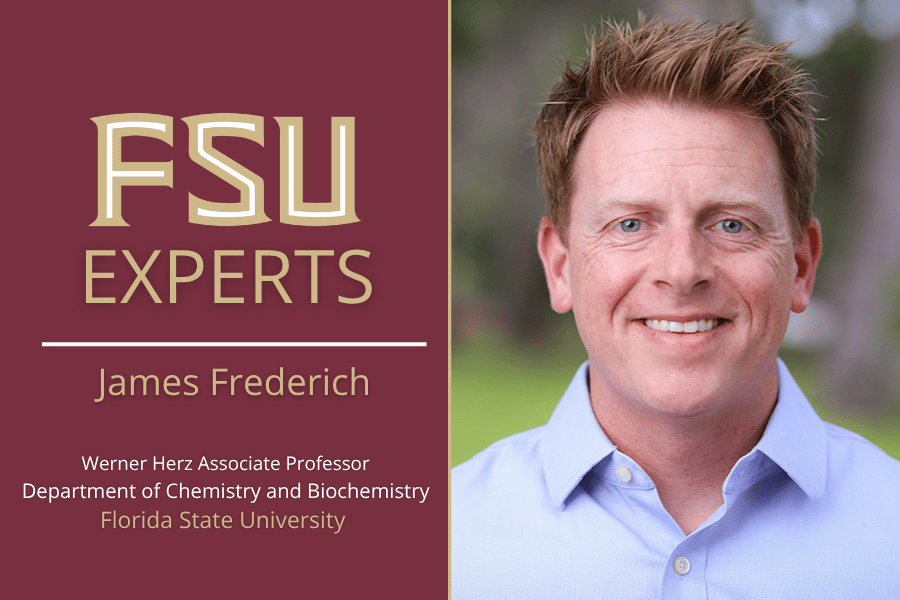
Florida State University chemist James Frederich is the Werner Herz Associate Professor and head of The Frederich Laboratory in the FSU Department of Chemistry and Biochemistry. He focuses on developing new strategies and tactics to prepare architecturally complex natural products that exhibit important biological activity in living systems. Frederich’s research specialties include chemical biology, synthesis and catalysis.
Frederich said the success of daraxonrasib reflects the vital role universities play in advancing high-risk scientific discoveries. FSU has its own history of innovation, including chemist Robert Holton’s pioneering work on the cancer drug Taxol in the late 1980s.
“This is a wonderful example of the impact of translational academic research,” Frederich said of the recent pancreatic cancer treatment. “Revolution Medicines started as an academic startup seeking to explore a high-risk, high-reward mechanism for cancer therapy. Academia uniquely provides the freedom to pursue such risky ventures. When they succeed, the results are often paradigm-shifting.”
Frederich said the value of academic research is often overlooked once groundbreaking treatments reach patients.
“It is sometimes easy to forget that academic research can change the world,” Frederich added. “Daraxonrasib, and the mechanism underlying its action, serves as an excellent reminder of the long-term return on investing in academic science.”
Media interested in interviewing James Frederich about the role of universities in developing cancer-treating drugs may reach out to him via email at jfrederich@fsu.edu.