
By accurately modeling these subsurface waves, scientists can remove their interference from NASA’s Surface Water and Ocean Topography, or SWOT, satellite, improving the satellite’s signal and allowing for observations of the Earth’s ocean circulation that are about 60 percent more accurate.
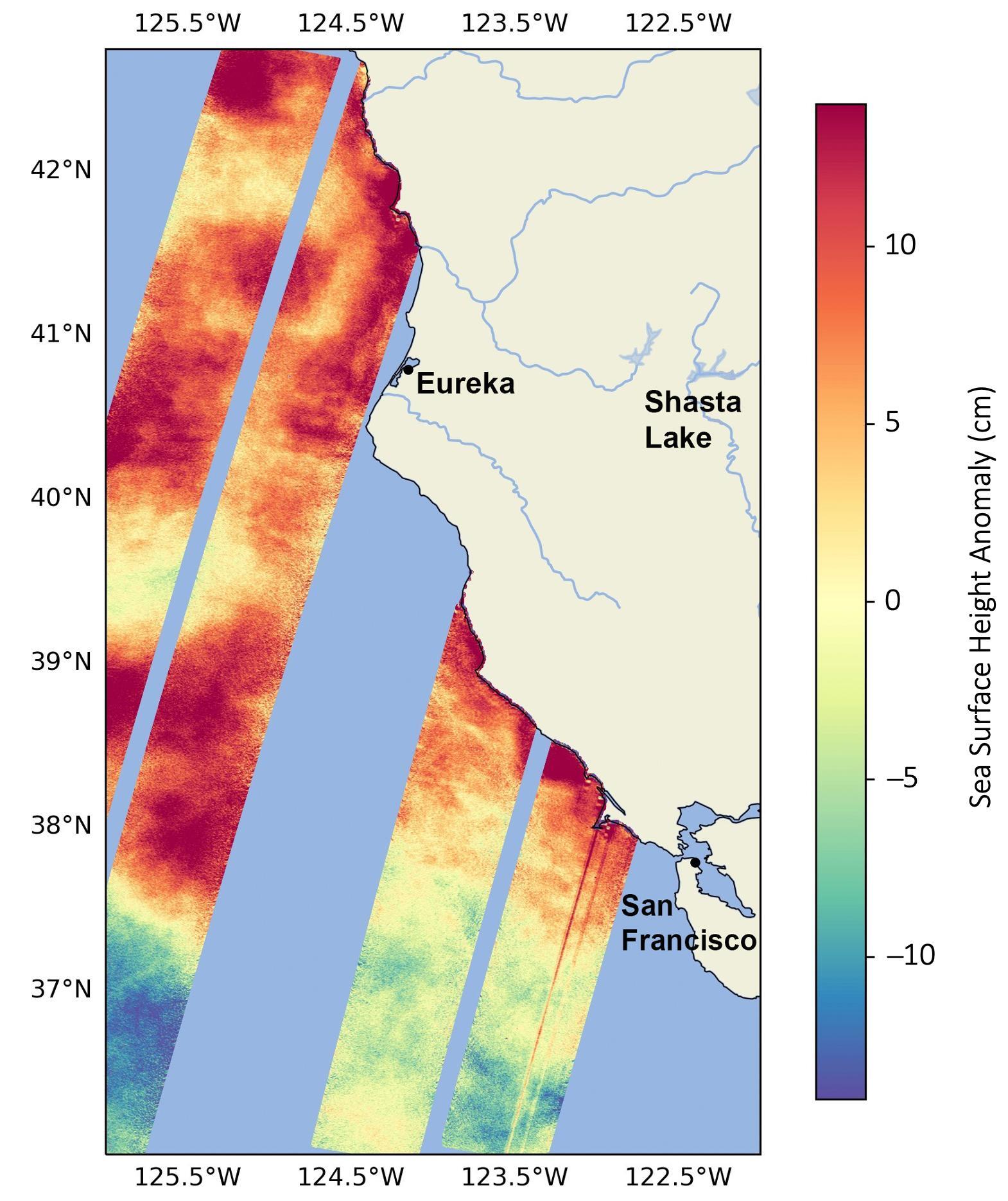
“SWOT is giving us the clearest view we have ever had of the ocean’s fine-scale circulation, the small eddies and currents that govern how much heat and carbon the ocean draws down from the atmosphere,” said study lead author Yadidya Badarvada, a researcher at FSU’s Center for Ocean-Atmospheric Prediction Studies who completed the work at FSU and while a postdoctoral researcher at the University of Michigan. “But those measurements have been partially obscured by internal tides, which mimic the very features we are trying to observe. What this work shows is that the interference we assumed was too chaotic to fix is actually predictable, once you have a model that accurately tracks the evolving ocean state.”
How it works
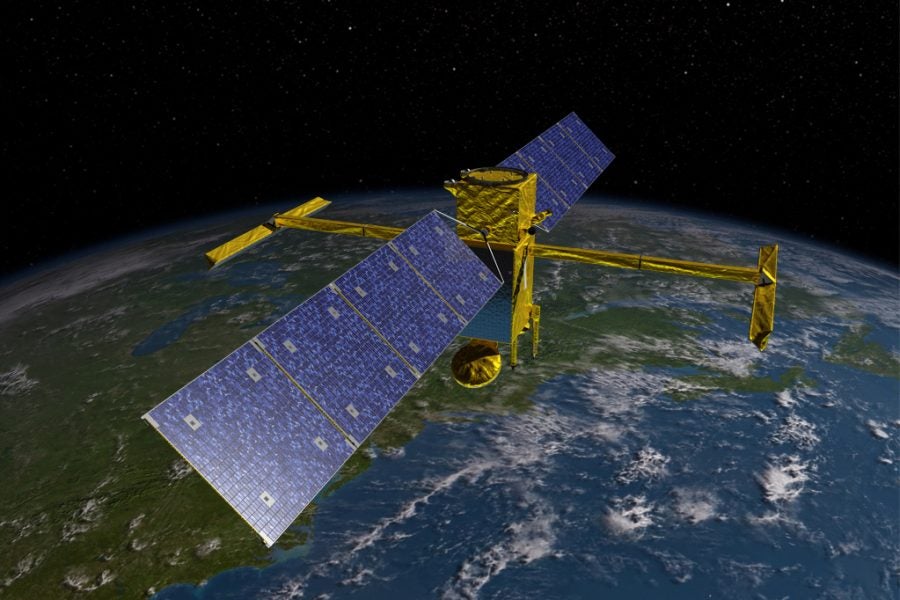
The SWOT satellite orbits Earth more than 500 miles above the planet’s surface.
Jointly operated by NASA and the French space agency CNES, this satellite observes the surface of the ocean, rivers and lakes to provide high-resolution data used by meteorologists, oceanographers, hydrologists and other scientists. SWOT imaging helps answer questions about the path of rivers, the aftermath of tsunamis and other water features on the planet’s surface.
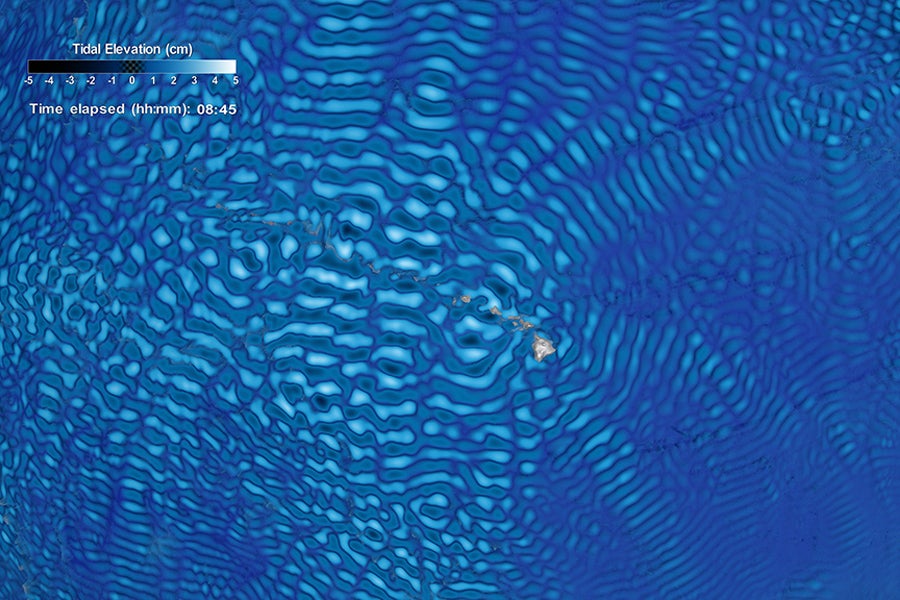
But finding the ground truth on the planet from the sky can be difficult. Complicating SWOT’s readings over the ocean are internal tides traveling beneath the ocean surface, whose signals overlap with the very features scientists are trying to observe.
Known as internal tides, these underwater waves have historically been the major challenge for measuring sea surface height. These “non-phase-locked” internal tides did not appear to have a predictable pattern, and researchers thought their interference was too chaotic to be corrected using standard statistical or sensing tools.