
Faculty Spotlight: Anna Cohen
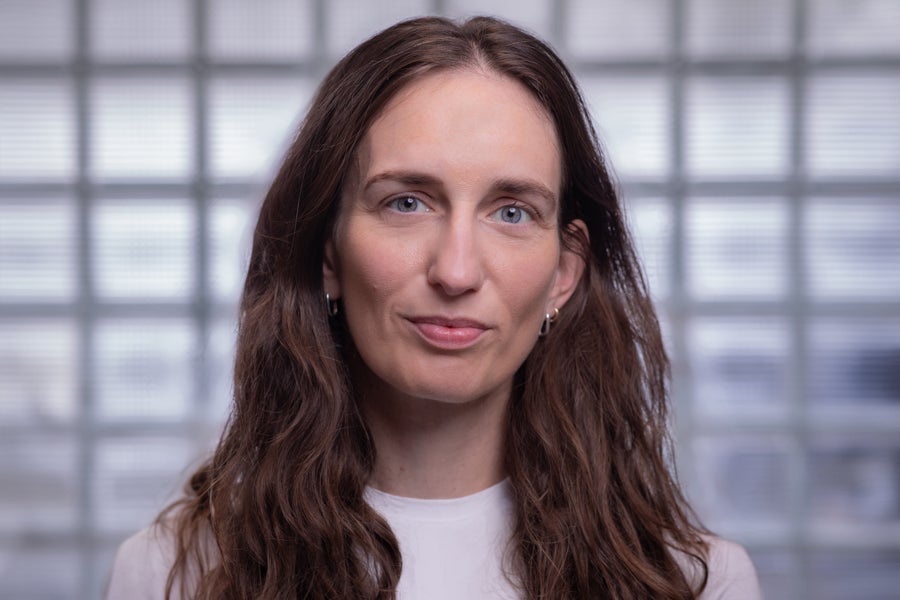
Anna Cohen is an assistant professor in Florida State University’s Department of Anthropology, part of the College of Arts and Sciences. As an anthropological archaeologist, she studies human-environment interactions and ancient urbanism in the Americas before European arrival. Cohen earned her bachelor’s degree in anthropology and religious studies from McGill University in Montreal, Quebec, in 2005, a master’s degree in anthropology and social sciences from the University of Chicago in 2008, and a master’s degree and doctorate in anthropology from the University of Washington in 2011 and 2016, respectively. Her fieldwork in western Mexico, eastern Honduras, and the Southwest U.S. explores how past societies responded to environmental, social and political changes.
Tell us about your background and what brought you to FSU.
I was born in Singapore and moved to Jakarta, Indonesia, when I was one week old because of my father’s work in the foreign service. I later lived in the Washington, D.C. area, Switzerland, and Canada, where my mother’s family is from.
After attending university in Montreal, I spent a year in Rajasthan, India, working with a nongovernmental organization focused on rural education. Since then, I’ve lived and worked in Paris, France; Boston, Massachusetts; Chicago, Illinois; Seattle, Washington; Tuscaloosa, Alabama; Mexico City and Pátzcuaro, Mexico; Utah and now Florida.
I joined FSU’s faculty in 2024 and was excited to join the Department of Anthropology as it expanded through new faculty hires and the reopening of its doctoral program.
What inspired you to choose your field of study?
When I was 9 years old, I read a book about the eruption of Mount Vesuvius in ancient Pompeii, Italy, that combined archaeological evidence with historical fiction. I decided then to become an archaeologist.
Break down your research for us.
I study how ancient communities in the Americas adapted to their environments and built cities long before Europeans arrived. I analyze ancient pottery and other remains while using tools like Light Detection and Ranging, or LiDAR, a laser-based technology that reveals ancient structures, roads, and other landscape modifications hidden beneath vegetation.
My fieldwork in western Mexico, eastern Honduras, and the Southwest U.S. explores how ancient people responded to political, social and environmental changes. This expands our understanding of the history of the Americas while challenging assumptions about how societies respond to change.
I also consider how to practice archaeology more ethically, including who participates in research, how technologies like LiDAR are used near communities with ancestral ties to archaeological sites, and whose perspectives shape stories we tell about the past.
What makes you passionate about your research?
We cannot fully understand the Americas today without understanding the centuries before and after European arrival. This was a period of major change. Indigenous communities were disrupted, people were forcibly brought from other continents, and new political, cultural and economic networks emerged. Many of these processes continue to shape migration and patterns of community today.
Written accounts provide one perspective, but archaeology offers another: the material traces of how people lived through these changes. I find that incredibly powerful.
What do you want the public to know about the importance of your work?
Archaeology helps us understand more than the distant past. It shows how people responded to environmental change, political upheaval, migration, inequality, and shifts in how communities were organized. These questions are still deeply relevant today. Studying how people navigated change centuries ago helps us understand the forces that continue to shape our modern world.
What is your favorite part of your job?
My job allows me to keep learning. Fieldwork lets me learn from landscapes, archaeological sites, local communities, students, and colleagues in ways I never could from my office.
I also enjoy training students to become archaeologists and critical thinkers who ask good questions and evaluate evidence.
What is your best memory so far from working at FSU?
I love learning about Florida from my students. They’ve taught me everything from regional rivalries to FSU traditions I knew nothing about when I arrived.
Who are your role models? Are there certain people who have influenced you most in your life and career?
My role models are women who built careers as field scientists, both today and in generations before me. Field research today can still mean being the only woman in a particular setting.
My ability to build this career exists in part because women before me pushed through barriers that made field science less accessible to them. I’m so grateful for that legacy, and I hope to help make the path wider for women who come after me.
Do you have any exciting upcoming projects or goals you’re working toward?
I recently received funding through the FSU Council on Research and Creativity Seed Grant program to examine how water influenced where ancient communities built monuments and ballcourts in eastern Honduras. Working with a LiDAR engineer at the University of Houston and FSU assistant professor of anthropology Oswaldo Medina-Ramirez, we’ve collected over 100 square kilometers of LiDAR data and will conduct archaeological surveys and research with local communities.
With colleagues in Mexico and Korea, I’m using chemical analysis of residues preserved in ancient pottery to understand what foods the Purépecha, an Indigenous people of western Mexico, ate and how they used their food vessels.
I’ll also teach an FSU International Programs course at FSU Panama next summer focused on Panama’s heritage, archaeology and anthropology. With support from FSU’s Native American and Indigenous Studies Center, I visited Panama last summer to meet with scholars and students, and I’m excited to introduce students to the country’s history and culture.
If your students only learned one thing from you, what would you hope it to be?
Stay curious about people, places, and traditions that differ from the ones you know! I hope my students leave my classes with curiosity about the world, the ability to think critically about what they encounter, and more empathy for people with experiences different from their own.