
How a Florida State University researcher uses AI to track hidden health risks from red tide
Red tide, a harmful algal bloom that produces toxins, is known for causing respiratory irritation in humans and killing fish in coastal waters. Recent research shows that the conversation is also shifting to include a more subtle neurological threat.
According to the Roskamp Institute, studies have linked red tide’s airborne brevetoxins to brain fog, intensified migraines and cognitive fatigue, yet the public remains largely unaware of when these risks peak.
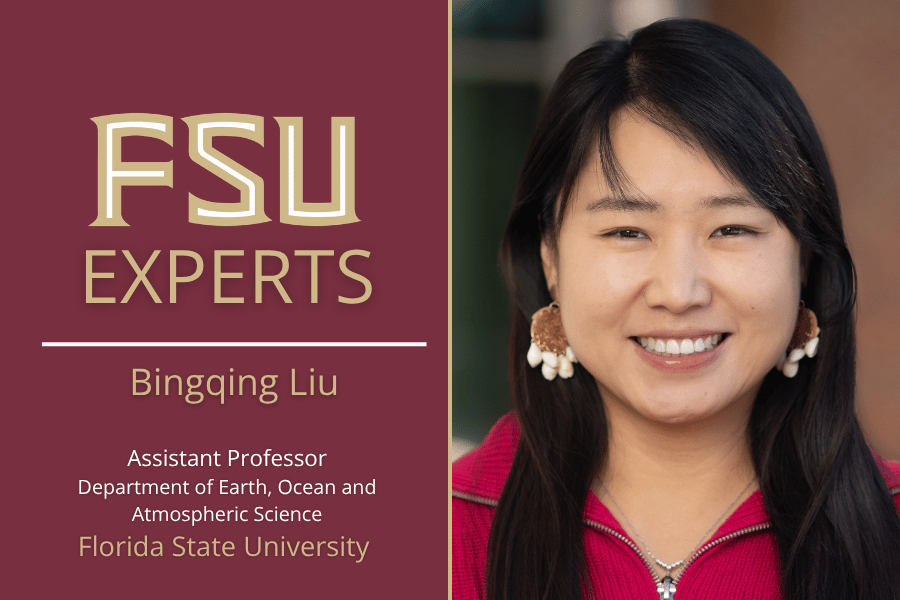
Florida State University’s Bingqing Liu is a leading satellite oceanographer and assistant teaching professor in the Department of Earth, Ocean, and Atmospheric Science. She also serves as principal investigator at the HyperCoast Lab @ FSU and is at the forefront of using AI and NASA satellite technology to revolutionize how we track red tide’s Harmful Algal Blooms (HABs) in the Gulf.
Liu was part of a research team that conducted a recent study published in Scientific Reports explaining how extreme weather events, such as Hurricane Milton in 2024, can cause rapid intensification of Karenia brevis red tides. The study, funded by the NASA PACE Program, details how heavy rainfall and severe runoff wash large amounts of pollutants into coastal ocean waters to allow toxic algae to grow. The research reinforces the growing health risk hurricane activity poses for humans living near coastal waters.
The study highlights the importance of using advanced hyperspectral satellite technology for monitoring HABs. For the first time, data from NASA’s PACE satellite allows scientists to map and distinguish different algal groups in coastal waters, including Karenia brevis, the organism that causes Florida’s toxic red tides, from other algal groups.
“New hyperspectral satellite missions such as PACE provide far more detailed information on ocean color, enabling us to distinguish phytoplankton types and not just overall abundance, including harmful species such as Karenia brevis,” Liu said. “This capability allows for earlier and more accurate detection of bloom development over large spatial scales. When combined with forecasting tools, these observations can provide advance notice of potential exposure, allowing vulnerable individuals, such as those prone to respiratory or neurological symptoms, to take precautions before conditions worsen.”
While general beach reports focus on dead fish, Liu’s work with hyperspectral imaging and AI approach offers more precise data on how these toxins move through air and water. Her research helps connect bloom detection to public health risks for Florida’s coastal communities.
Based off her latest research, Liu is available to discuss how advanced satellite data can serve as an early warning system for those with neurological vulnerabilities; how FSU’s new algorithms can detect toxic concentrations that traditional monitoring might miss; and the science of how toxins move from the Gulf into the lungs and potentially the brains of residents.
As Florida continues its Atlantic hurricane season, Liu can explain how her lab’s technology can support earlier warnings and help reduce health risks.
Media interested in interviewing Liu may reach out to her via email at bingqing.liu@fsu.edu . This week, she will give a presentation on remote sensing of red tides at the 13th Symposium on Harmful Algae in Iowa.
Bingqing Liu, satellite oceanographer, Department of Earth, Ocean, and Atmospheric Science
How can AI and hyperspectral imaging work together to detect red tide?
AI allows us to move from simply observing harmful algal blooms to anticipating them. By combining satellite observations, such as those from NASA’s PACE mission with ocean models and environmental data, AI can identify patterns that precede red tide events, including changes in phytoplankton communities and physical–chemical conditions (e.g., temperature, salinity, currents, and nutrient levels). This enables earlier detection and short-term forecasting, which can support timely advisories and mitigation efforts. While we cannot prevent red tide itself, we can significantly improve early warning and reduce its impacts on communities and ecosystems.
How do these toxins affect humans?
Red tide organisms, such as Karenia brevis, produce toxins (brevetoxins) that can affect humans in multiple ways. In coastal areas, wave action can break open algal cells and release toxins into the air, where they can be inhaled, leading to respiratory irritation and potentially neurological symptoms like headaches or brain fog. Toxins can also accumulate in shellfish, posing risks when consumed. Understanding how blooms develop, intensify and move is critical for predicting exposure pathways and protecting public health.