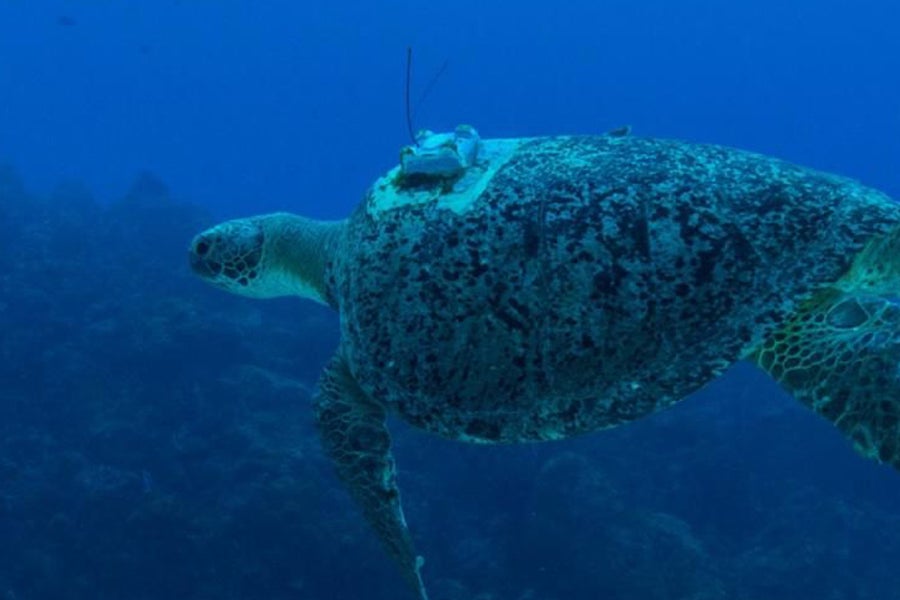

The findings shed new light on the movements of male green sea turtles, which are much harder to study than females. Female turtles regularly return to nesting beaches to lay their eggs, giving researchers predictable opportunities to tag and monitor them. Males, however, rarely return to land after entering the sea as hatchlings, leaving major gaps in scientists’ understanding of where they travel and which marine areas are important to their survival.
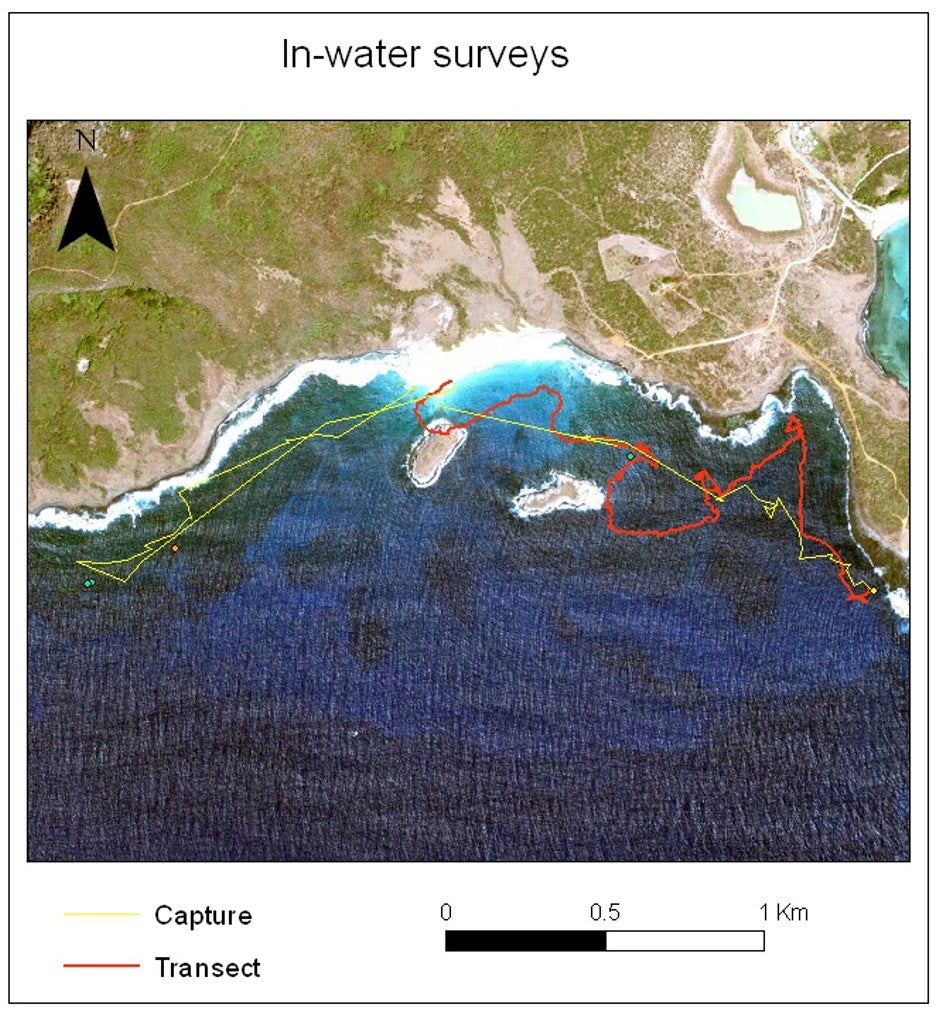
The FSU team, based in the Department of Earth, Ocean, and Atmospheric Science, tracked adult male green sea turtles at a remote breeding site off Brazil’s coast during three breeding seasons. The study provides new information about where the turtles travel during and after breeding season and could help guide conservation efforts in areas they use for migration and feeding. The research was recently published in Marine Ecology Progress Series.
“Many turtles undertook long-distance migrations, with some migrating for almost a month,” said Armando Barsante Santos, one of the study’s co-authors and a postdoctoral researcher in the Marine Turtle Research, Ecology and Conservation Group at FSU. “Their sense of navigation is impressive, and identifying paths they use during their oceanic migrations is essential for conservation management.”