
Student Spotlight: Renee Rushing
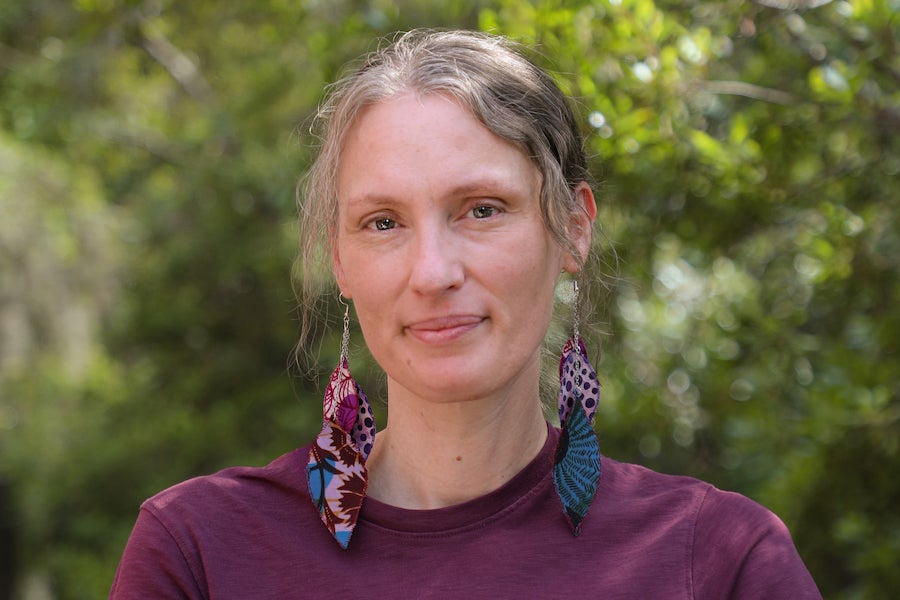
Renee Rushing is a fifth-year doctoral student in Florida State University’s Department of Philosophy, part of the College of Arts and Sciences. Her research focuses on moral psychology, emotions, complex developmental trauma and free will. Her essay, “Fitting Diminishment of Anger: A Permissivist Account,” was awarded the 2022 Philosophy Essay Prize from the Royal Institute of Philosophy and later published in the institute’s flagship journal, Philosophy. Rushing was selected for the 2025-2026 Graduate Fellows Program at the Emotion and Society Lab at the University of California, Riverside, a virtual nine-month opportunity in which she conducts research with a cohort of graduate students studying emotions and their impact on vulnerable populations. In recognition of her academic work, Rushing also received the Royal Institute of Philosophy’s 2022 Essay Prize, a prestigious international award recognizing outstanding philosophical scholarship.
Tell us about your background, where you’re from and what brought you to FSU.
I’m from a small town in California called Oroville. I went to Butte Community College in Butte Valley, California, after I graduated from high school. School was difficult for me, so I left at 19 and pursued work that allowed me to help others, including with Mercy Ships, an organization that provides medical care in developing nations. I later learned I have a processing disorder, ADHD and epilepsy, which helped me better understand those challenges and return to school. I earned two associate degrees at Butte Community College in 2014 and later completed a bachelor’s degree in philosophy at California State University, Chico, in 2019. Later that year, I came to FSU to pursue graduate study in philosophy, and I earned my master’s degree in 2022 before continuing on in the doctoral program.
What inspired you to pursue a degree in philosophy?
I’ve always been interested in understanding the human condition. I’ve explored psychology and forms of human expression like literature, art and storytelling. Philosophy gave me a way to develop critical-thinking skills and gain deeper insight into those ideas.
Break down your areas of research for us.
I research moral psychology with a focus on attitudes such as anger, blame, compassion and forgiveness. I study how anger can be harmful, particularly for vulnerable individuals. I also research moral responsibility and free will, examining how individuals maintain control and responsibility over their actions.
What aspects of your studies do you find most rewarding?
One of the most rewarding aspects of my work is applying my own experiences to philosophical questions. For example, I draw on my experiences with attention-deficit/hyperactivity disorder when exploring questions of free will and self-control.
What do you want the public to know about the importance of your research?
My research helps raise awareness and inform solutions to real-world issues. For example, my work examines how anger and emotional abuse impact vulnerable individuals, particularly children, and identifies often overlooked psychological harms. This may support improved approaches in fields like psychiatry and therapeutic practice in the future.
Tell us about your publication, “Fitting Diminishment of Anger: A Permissivist Account.”
In my paper, I examine why it can feel rational to remain angry after being wronged, even though it often seems unreasonable to hold onto anger indefinitely. I argue that compassion can provide a meaningful reason for anger to diminish, especially when we recognize vulnerability in others.
Tell us about being selected for the Emotion and Society Lab’s Graduate Fellows Program at the University of California, Riverside. What’s the experience like, and what does this achievement mean to you?
Being a part of the Emotion and Society Lab has been both encouraging and inspiring. I work alongside other graduate students studying emotional harm affecting vulnerable populations, including children, minorities and marginalized groups.
What are some current projects you’re working on?
One of my current projects examines how parental anger affects children and their development. I’m also developing research on free will using ADHD as a case study to better understand self-control and autonomy. In addition to my research, I wrote a novel, “A Fairytale for Edna,” an adult fairytale that explores themes of vulnerability, compassion, and belonging through the story of an 85-year-old protagonist who takes on dragons. The novel reflects many of the emotional and philosophical themes present in my academic work, and I hope to publish it in the future.
Are there any faculty or staff who have helped or inspired you?
My adviser, professor and Department of Philosophy chair Randolph Clarke, has helped me tremendously. He has provided consistent support and feedback that has strengthened my confidence in my work.
William H. and Lucyle T. Werkmeister Professor Alfred Mele has been a tremendous help as well. He has supported my collaborative research projects and provided valuable feedback.
What advice do you have for fellow students? What advice do you have for undergrads?
Believe in your ability to succeed, even when things feel difficult. Growth takes persistence, and setbacks don’t define your potential. Also, don’t let achievement of any kind define your self-worth — your value goes beyond academic performance.