
FSU biologist earns $1 million NSF CAREER Award for epigenetics research
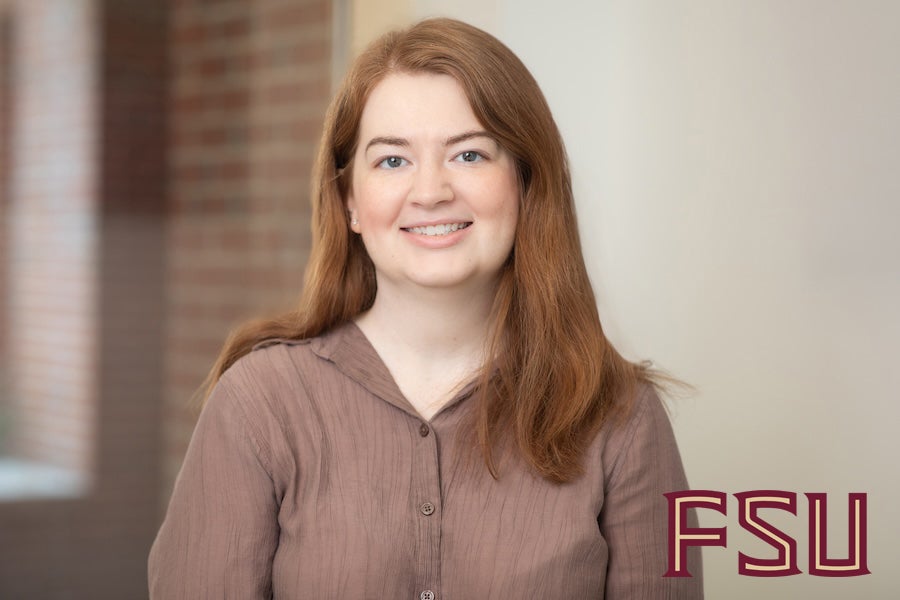
A Florida State University geneticist has earned one of the most prestigious awards available to early career faculty for her work investigating how genetically identical individuals raised in the same environment, like identical twins, can still be different from each other.
Assistant Professor of Biological Science Amy Webster received a 2026 Faculty Early Career Development Award, or CAREER Award, from the National Science Foundation to study how genes are regulated to affect their traits. The award provides $1.1 million in funding. Webster is one of four FSU faculty members to receive CAREER awards so far this year, all from the College of Arts and Sciences.
“The Webster Lab is still relatively young, so this support provides momentum to build a strong foundation for the future,” Webster said. “We know our genomes are important for many of our characteristics, so we expect genetically identical individuals to be broadly similar. But we also know DNA sequence doesn’t predict everything about us. Many traits and diseases are influenced by the environment, and some differences arise in a seemingly random way. My lab studies how ‘noise’ in gene regulation can have important consequences for organisms.”
The CAREER Awards Program offers NSF’s most significant awards in support of early career faculty with the potential to serve as role models in research and education and lead groundbreaking advances in their fields. The award provides faculty with five years of funding to support students and conduct research while affording them the opportunity to work closely with NSF staff on developing their professional endeavors.
“NSF CAREER awards are prestigious and bring attention to the high caliber of our faculty,” said Karen McGinnis, associate dean of the College of Arts and Sciences and professor of biological science. “Dr. Webster’s combination of expertise in mathematics, genetics, and genomics allows her to tackle interesting and significant questions about genetic inheritance, evolution and variation among individuals.”
While a person’s DNA remains largely unchanged throughout life, how their genes are expressed can change due to environmental factors such as sun exposure, diet and stress. For instance, smoking cigarettes represses a specific gene that prevents cancer; when smokers quit, this gene can resume its cancer-fighting functions over time. Webster’s research focuses on how and why certain genes are flipped “on” or “off,” an area of the field known as gene regulation.
“By understanding DNA’s interactions with other factors to influence gene regulation, we can gain insight into how biological differences arise during an individual’s life,” Webster said. “Long term, this work helps us better understand why individuals differ in traits and disease risk, even when genetics alone doesn’t fully explain those differences.”
To study the interactions between an organism’s genome and environment, the Webster Lab raises and observes Caenorhabditis elegans, a microscopic roundworm that shares 60 to 80 percent of its genes with humans and can express half of all known human disease genes.
“Although they’re clones raised under identical conditions, we’ve found that some genes are regulated differently across individuals, which can affect important traits such as reproductive output,” Webster said. “We’re now working to understand why some genes are regulated consistently, while others are more variable. We’re also investigating how genome sequence and epigenetic modifications, the chemical changes influencing how DNA is packaged and regulated, contribute to these differences.”
Additionally, the award will enable the Webster Lab to investigate whether non-genetic differences that arise in one generation can affect subsequent generations. To do this, Webster will observe evolution in real time by employing experimental approaches allowing her lab to grow more than 200 generations of Caenorhabditis elegans populations.
NSF CAREER awards also support researchers’ investment in educating and training the next generation of scientists, and this award will bolster the Webster Lab’s offering of student opportunities in bioinformatics — a field combining computer science, statistics, and mathematics to analyze massive biological datasets — and artificial intelligence. For example, the Webster Lab employs these technologies to assist in identifying gene regulation patterns that are difficult and time consuming to detect manually.
“Since starting my lab at FSU, it’s been incredibly rewarding to see students and researchers become invested in the questions we’re asking and take ownership of their experiments and analyses,” Webster said. “We’ve accomplished a lot already, and I’m excited to see what we can do next with sustained NSF support.”
Webster joined FSU’s faculty in the Department of Biological Science in 2024 and earned a First-Year Assistant Professor Award in 2025. She earned a doctorate in genetics and genomics from Duke University, in North Carolina, in 2021 and was a postdoctoral scholar in the Institute of Ecology and Evolution at the University of Oregon before coming to Tallahassee.
Visit the Department of Biological Science website for more information on faculty research.