
Faculty Spotlight: Alfred Mele
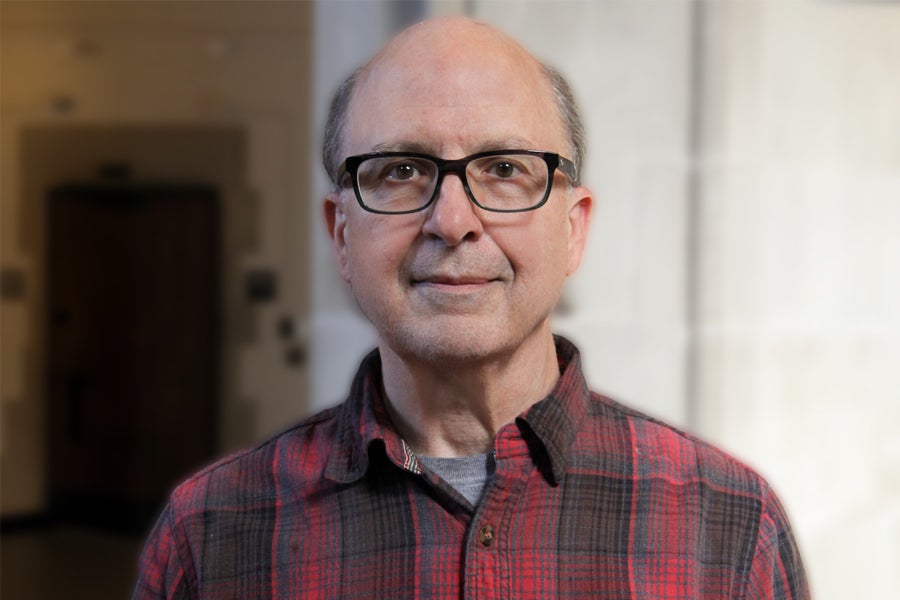
Alfred Mele is a philosopher and professor in the Florida State University Department of Philosophy, part of the College of Arts and Sciences. He has been a leading figure in the field since publishing his first book, “Irrationality,” in 1987. Since then, Mele has authored 12 more books exploring philosophical questions of free will, moral responsibility and the forces that shape human behavior. He has served as the William H. and Lucyle T. Werkmeister Chair since joining FSU’s faculty in 2000, and in 2010 and 2014, he was awarded two multiyear, multimillion-dollar grants from the John Templeton Foundation, a prestigious organization that supports interdisciplinary research.
Tell us a little about your background.
I received my doctorate in philosophy from the University of Michigan in Ann Arbor in 1979, where my dissertation focused on Aristotle. I began my career examining topics that interested him, such as human behavior and motivation.
After completing my doctorate, I began my first position at Davidson College in North Carolina, where I taught philosophy until 2000. I then joined FSU’s faculty as a professor and took on the role of William H. and Lucyle T. Werkmeister Chair, a permanently endowed position that allows me to spend more time reading, writing and directing dissertations for the department. I was drawn to FSU’s then-developing philosophy department, which has grown significantly since.
What makes you passionate about your research?
I’m fascinated by what motivates us morally as people, why we sometimes don’t do what we should, and how we can resist temptation and do the ‘right’ thing. I’m drawn to both philosophical and scientific research. I love being in a position to answer questions regarding human behavior.
What does it mean to be No. 1 on the Top 10 list of “Most Cited Living Philosophers with Google Scholar Pages Working on Free Will & Moral Responsibility?”
It’s gratifying to know that people read what I write. I’ve done extensive research on both the scientific and philosophical sides of those topics, so I was happy to see my work being recognized. While it’s an accomplishment, it’s not something I particularly set out to achieve in my work. I seek to answer long-standing philosophical questions about human behavior.
Tell us about the John Templeton Foundation grants you received.
It began when a representative from the Templeton Foundation reached out to me about running a study on free will. His group, seeking advice for their study, sent me a tentative proposal, which I revised and submitted to a panel at the foundation. They approved it and awarded us $4.4 million for a four-year project that brought together neuroscientists, psychologists, and philosophers to address major questions regarding free will. This grant also supported yearly conferences to discuss our findings, and many publications were born from the project.
After four years, the Templeton Foundation was pleased with the results and approved another study of mine regarding self-control. That project lasted three years with a similar structure and tackled many aspects of self-control such as what it is, how it can be improved, and why it breaks down when it does.
What does your role as FSU’s William H. and Lucyle T. Werkmeister Chair entail?
The William H. and Lucyle T. Werkmeister Chair is an endowed position permanently funded from the estate of the late Mr. and Mrs. Werkmeister. William Werkmeister was a significant figure in FSU philosophy who joined the university in 1966. With this position, FSU’s plan was to attract a philosopher who would raise the visibility of the department and spearhead the department’s growth, which has been part of my responsibilities for 26 years. I teach two courses a year, which allows me to allocate more time to research and writing as well as directing dissertations.
How has your work played a role in the growth of the department?
The contributions of my colleagues and myself have played a significant role in the development of the department. Since I began, the number of students and faculty in our department has grown substantially. The department has been ranked number one in the English-speaking world in the philosophy of action for many years by the Philosophical Gourmet Report, thanks to the faculty we’ve hired. Our ranking is appropriate, and it brings good applicants to the graduate program, which benefits our other students and faculty.
What did it mean to you when the Department of Philosophy held the Fall 2024 Werkmeister Conference in your honor?
It feels great to be recognized. Many of my colleagues spoke at the event, and there will be publications based on those presentations within the next year. I’m proud to see feedback indicating I’ve made a difference, especially in students’ career paths.
What’s your favorite part of your job?
My favorite part of the job is my research and writing, but I enjoy teaching as well. Directing strong dissertations and teaching undergraduate and graduate courses are a close second to my research.
What’s your best memory so far from working at FSU?
My favorite memory was receiving my first Templeton grant. At the time, the department, like many across academia, was not in great financial shape because of the aftermath of the 2008 recession. It was encouraging to share positive news and bring in significant funding, which motivated people within the department.
If your students only learned one thing from you, what would you hope it to be?
My best advice would be to start their work early, as it helps ensure they have time to handle unexpected setbacks. I was once invited to write a sentence or two for a Korean book on self-control, and the saying I contributed was, “Start your work early. You never know when a tree will fall on your house.”