FSU professor emeritus named American Geophysical Union Fellow for contributions to Earth science
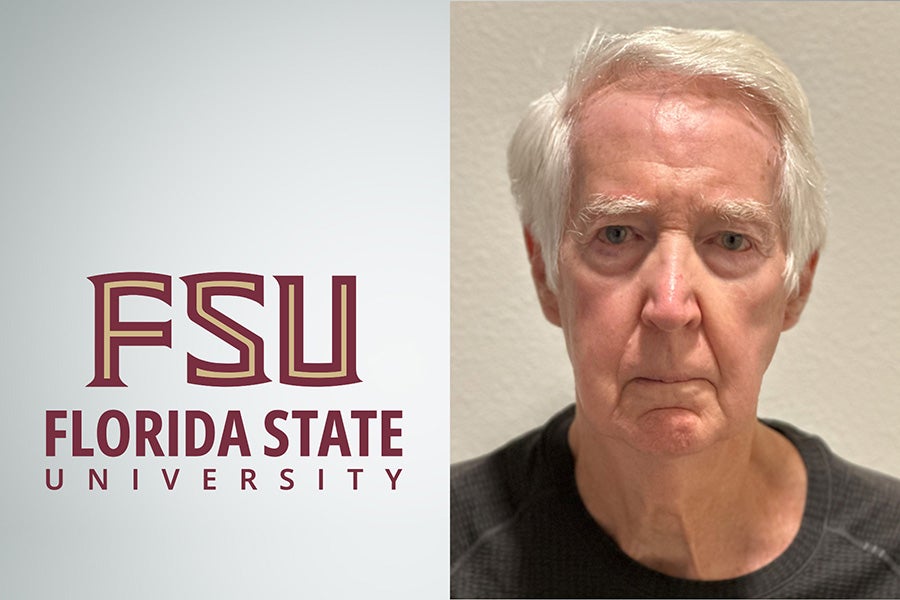
A Florida State University environmental scientist has been named a fellow of a prestigious worldwide scientific community for his contributions to oceanography and Earth science.
Bill Burnett, the Carl Henry Oppenheimer Professor Emeritus of Oceanography in FSU’s Department of Earth, Ocean, and Atmospheric Science, has been named a Union Fellow of the American Geophysical Union, one of the world’s leading Earth and space science organizations, for his body of work that has led to key advancements in our understanding of the Earth and its natural processes.
“I’m proud of this recognition and wish I could share it with my former graduate students,” said Burnett, a member of AGU since 1975. “They were the best and the single biggest reason for my success. As an AGU Fellow, I’ll act as an external expert, advising government agencies and other organizations outside the sciences upon request.”
Founded in 1919 by the National Research Council, the AGU is an international nonprofit association supporting Earth and space scientists dedicated to discovery and solutions to societal challenges. The fellows program, established in 1962, recognizes current AGU members who have made exceptional contributions to Earth and space science through a breakthrough, discovery or innovation in their field. Only up to 0.1 percent of the existing AGU members can be named a fellow each year, and Burnett is the fifth FSU faculty member to be named an AGU Fellow.
“Bill’s election as an AGU Fellow is both an extraordinary individual honor and a reflection of the long-standing tradition of internationally influential research in FSU’s Department of Earth, Ocean, and Atmospheric Science,” said Mike Stukel, department chair. “Our faculty don’t simply contribute to existing areas of research. They help define new questions, develop new approaches for answering them and change the way their disciplines think about the Earth system.”
Burnett’s interest in science began during his childhood in Montclair, New Jersey, in the 1950s when his parents bought him a junior scientist chemistry kit. As a teenager, he was inspired by ocean explorer Jacques Cousteau, whose worldwide expeditions led him to take a scuba diving course at the local YMCA. He and his friends later formed a diving club at their high school, laying the groundwork for a decorated career in ocean research.
“A junior chemistry set, disappearing ink and an interest in science led to a career in chemical oceanography,” Burnett said.
His six-decade career includes a diverse research portfolio that improved scientists’ understanding of two natural ocean-related processes: phosphate-rich sediment formation and submarine groundwater discharge. Early in his career, Burnett studied phosphorites, which are uranium-enriched ocean rocks that are mined as a fertilizer source in Florida and elsewhere. By comparing uranium levels in the rock formations to their decay products, he was able to determine the age of these types of rocks from a modern ocean environment off Peru and Chile. He was also able to evaluate how fast they formed, improving our understanding of marine phosphorite formation.
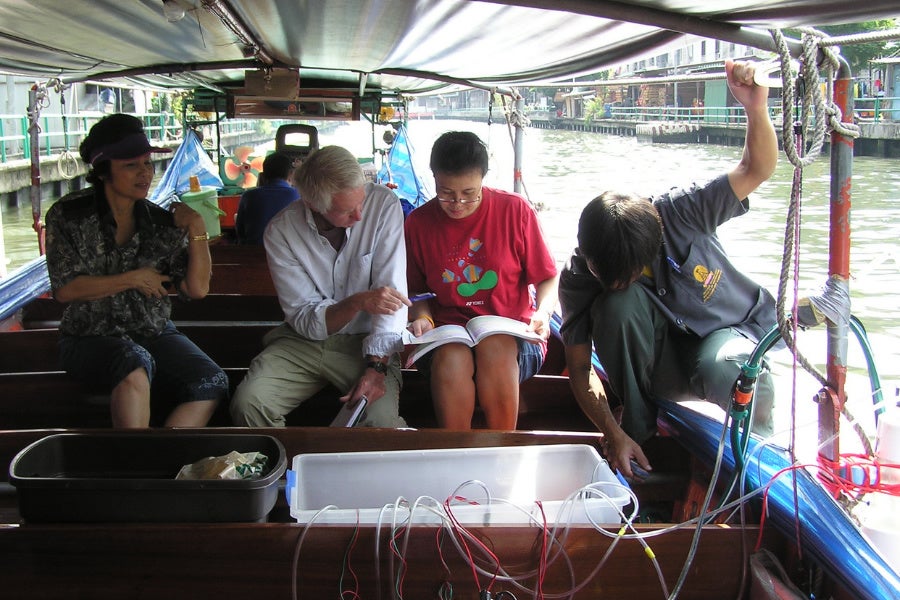
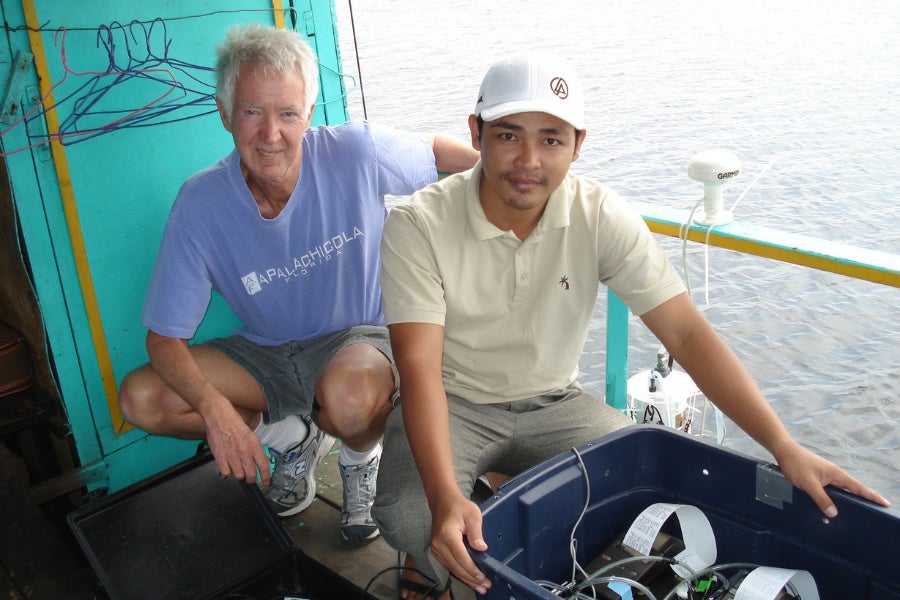
Submarine groundwater discharge occurs when water below the Earth’s surface, sometimes contaminated with natural or man-made pollutants, seeps into nearby oceans through aquifers — underground layers of water-bearing rock such as sand, gravel, or silt — that store and transmit groundwater. To estimate how much groundwater flows into the ocean, Burnett tested coastal seawater for natural isotopes of radon and radium found more frequently in groundwater, giving scientists a better understanding of how much groundwater contributes to ocean chemistry and pollution.
“Knowing how the Earth works is our basic goal, even if it doesn’t lead to an immediate practical application,” Burnett said. “For example, understanding how marine phosphate minerals form could enhance our understanding to the point where we could improve our prospecting tools for new mineral deposits. Understanding the extent of groundwater discharge into marine environments can assist managers working on coastal nutrient budgets.”
Before joining FSU in 1977, Burnett worked as a visiting scientist at the Federal University of Brazil in Salvador from 1976 to 1977 and as a postdoctoral researcher and adjunct assistant professor at Stony Brook University in Stony Brook, New York, from 1974 to 1976. He earned his doctorate in marine geochemistry from the University of Hawaii at Manoa in 1974 and his master’s in geochemistry from the same institution in 1971. He received his bachelor’s in geology from Upsala College in East Orange, New Jersey, in 1968.
To learn more about research conducted in the FSU Department of Earth, Ocean, and Atmospheric Science, visit eoas.fsu.edu.