Throughout her career, Wing has contributed to large, collaborative research projects such as the Radiative-Convective Equilibrium Model Intercomparison Project, or RCEMIP, which she has led for a decade. RCEMIP compares how different weather and climate models simulate a simplified version of the tropical atmosphere; this allows researchers to learn new information about how warming changes tropical clouds and how cloud clustering affects climate and rainfall.
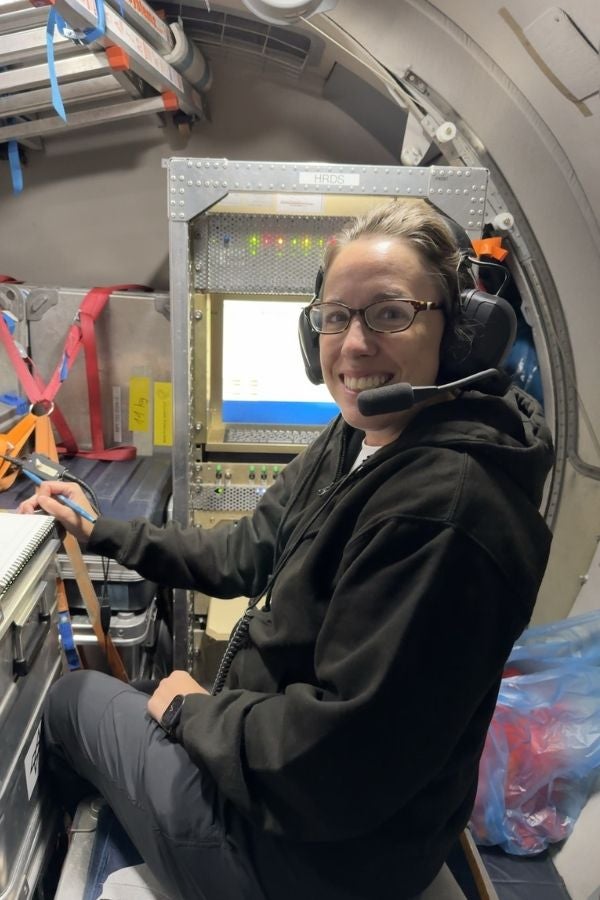
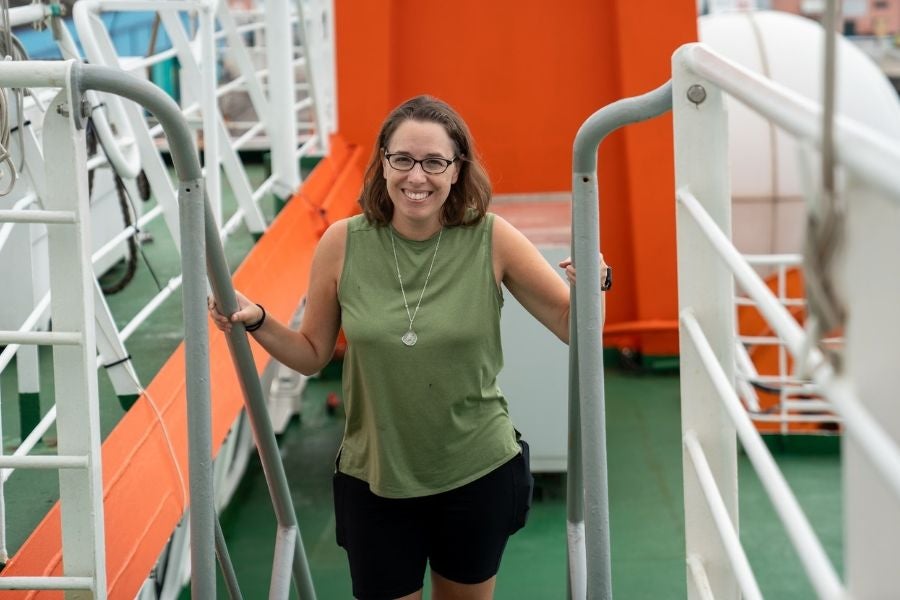
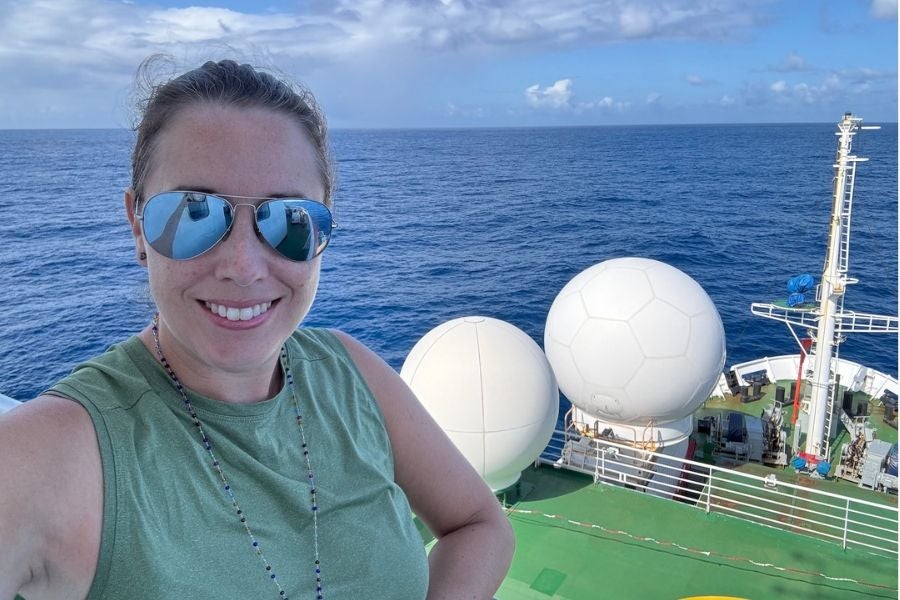
In 2024, Wing led the Process Investigation of Clouds and Convective Organization over the atLantic Ocean, or PICCOLO — the U.S. component of the ORganized Convection and EarthCARE Studies over the TRopical Atlantic, or ORCESTRA, project, an international field campaign. Using Colorado State University’s Sea-Pol Radar on the German research ship Meteor, Wing collected cloud and rain measurements, spanning from Barbados in the Caribbean to Cape Verde off Africa’s western coast. Researchers used this data to test hypotheses about the development of cloud clusters and how they influence Atlantic rainfall, tropical circulation features and climate.
“Allison’s research tackles fundamental questions about how tropical cyclones form and intensify and how they might be responding to a changing climate,” Stukel said. “She brings an unusually powerful combination of fundamental theory, sophisticated numerical modeling and observations to these problems, allowing her to connect basic atmospheric physics with some of the most consequential weather hazards affecting society.”