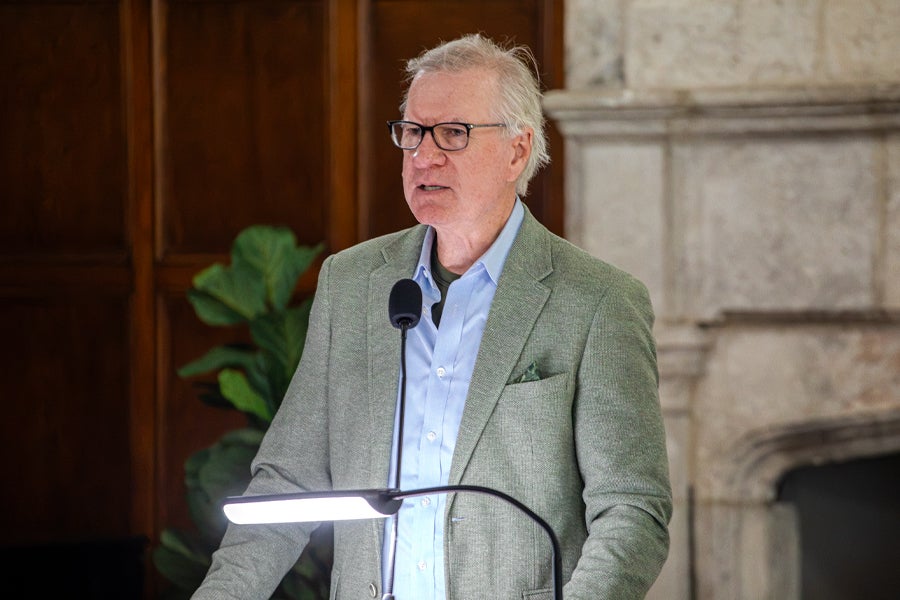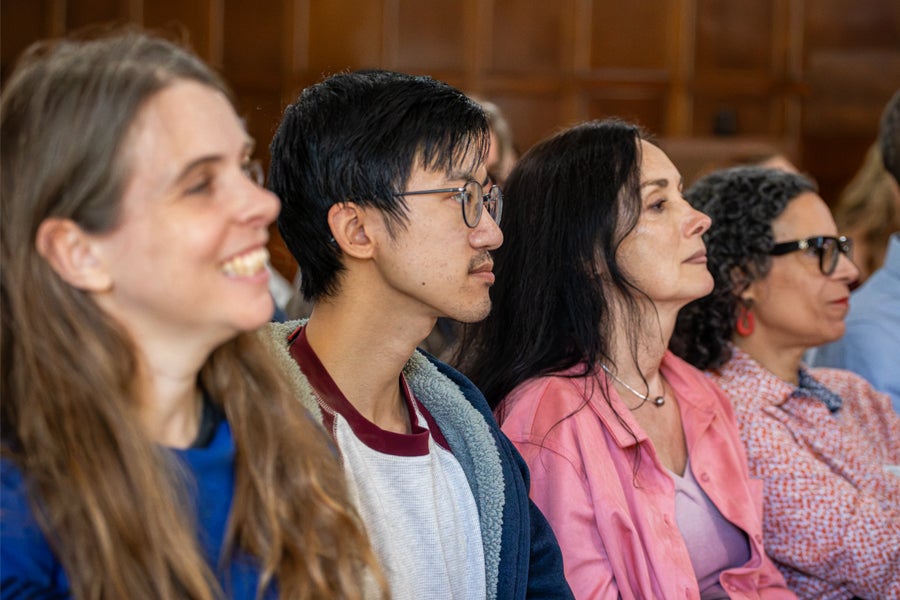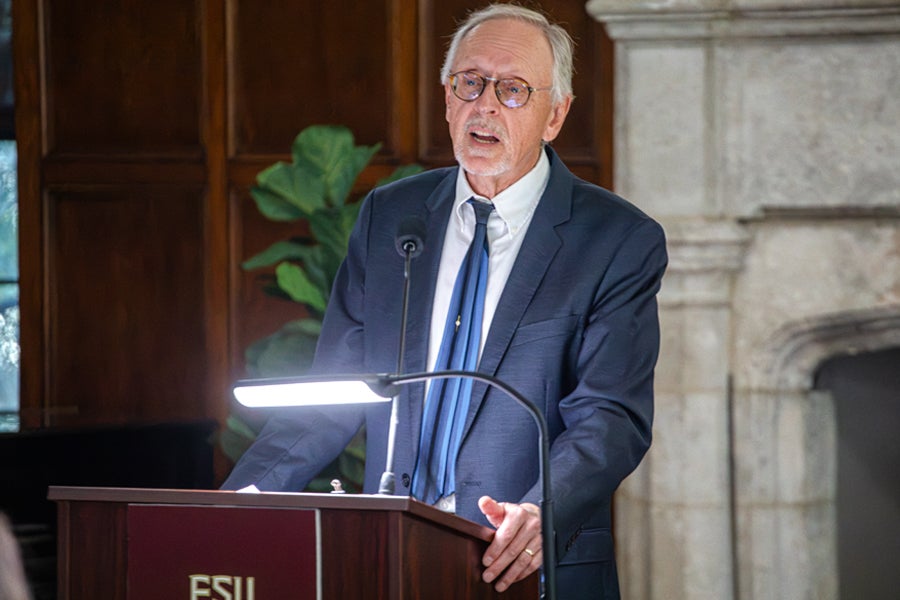
How did humans become musical creatures? Can the sciences and humanities help us understand the origins of music? Those questions guided a guest lecture from the Florida State University Humanities Center on Thursday, Oct. 22, held as part of FSU Discovery Days, the university’s annual celebration of research, creativity and innovation.
Gary Tomlinson, Sterling Professor of Music and the Humanities and director of the Whitney Humanities Center at Yale University, delivered the lecture, “Evolutionary Humanities and the Hard Problem of Music,” to students, faculty and local community members in the Beth Moor Lounge.
Fundamental abilities shared by all humans make music possible, Tomlinson told the audience.
“You’re all musicians,” he said. “Human music depends universally on a number of capacities that come in all normal human development and socialization, in a way that is similar, but not identical, to the kicking in of language.”
Understanding how those capacities emerged, however, presents a challenging question. Researchers have suggested music evolved to bring people together, calm children, coordinate group activities or facilitate rituals. But Tomlinson argued these theories explain how people use music, not how music itself originated.