
Alumni Spotlight: Matthew Christoffel
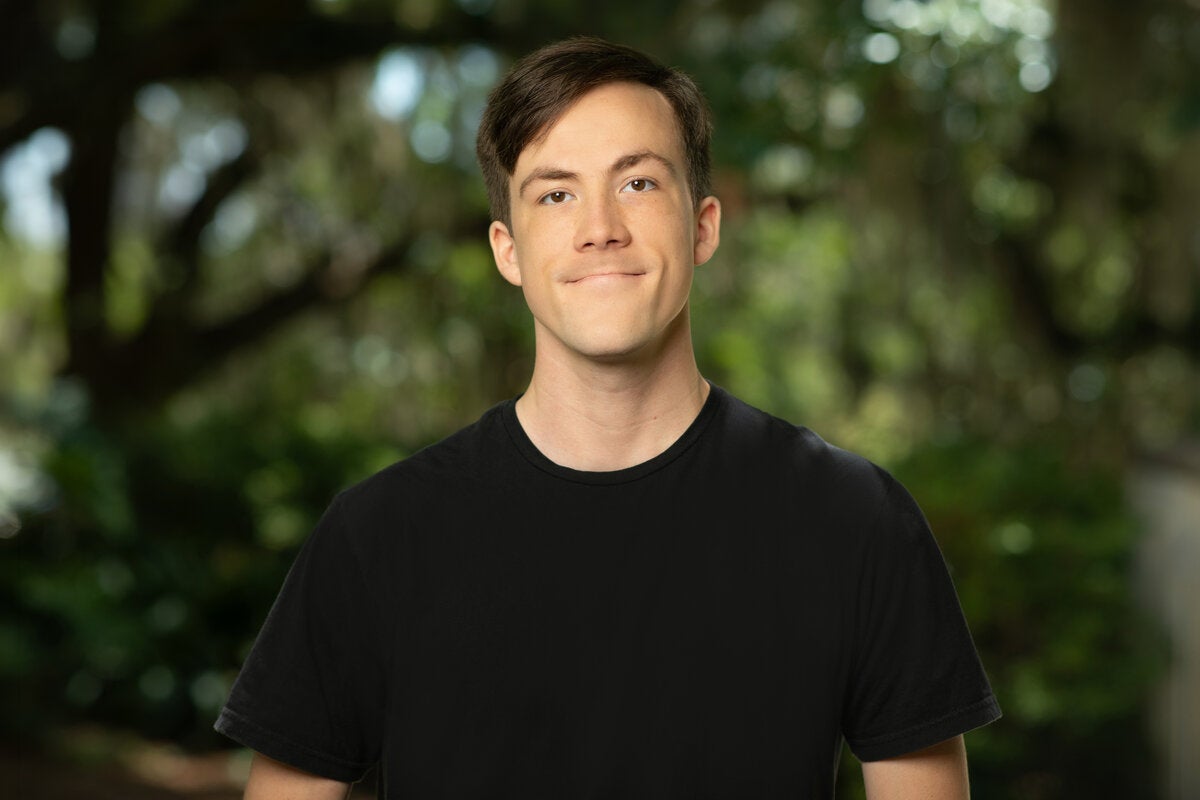
Matthew Christoffel is a two-time Florida State University alumnus who earned a master’s degree in computer science with a focus in cybersecurity in 2026 and a bachelor’s in computer science in 2024 from the Department of Computer Science, part of Florida State University’s College of Arts and Sciences. Christoffel participated in the CyberCorps: Scholarship for Service program, which offers tuition scholarships in exchange for work within the federal government after graduation for a period equivalent to the length of their study. He also founded the Cybersecurity Community Outreach Organization at FSU in 2024, a group that allows students to gather and learn about challenges in the technological, social, organizational and cognitive aspects of cybersecurity. Since graduating, Christoffel has been completing entry-level computer science certifications to help hone his skills in the field while he pursues a full-time role with various cybersecurity companies.
Tell us about your background, where you’re from and what brought you to FSU.
I’m originally from Brevard County, Florida. A close relative went to FSU, and their experience sparked my interest in the university at a young age. After learning about its fantastic computer science program, I decided to attend FSU as well.
What inspired you to pursue a master’s degree in computer science?
I’ve always had a strong desire to learn and practice hands-on skills, and that interest, along with the financial opportunities in computer science and the tech industry, was a strong motivating force. I learned a lot through my undergraduate studies at FSU and was thrilled when presented with the opportunity to pursue my master’s through the CyberCorps: Scholarship for Service program.
Tell us about your role as founder and chair of the Cybersecurity Community Outreach Organization at FSU.
Through my own experience in computer science, I learned how valuable cybersecurity knowledge is and how much effort goes into its outreach. With the help of team members Amelia Sieg and Brandon Kazmierczak, now fellow alumni, and support from our alumni sponsor Aaron Hoffman, we founded an organization that promotes cybersafety in the Tallahassee community. In partnership with the Tallahassee Senior Center Foundation, we taught classes to audiences of more than 100 people, worked with local high schools on cybersecurity initiatives, and placed 10th in the 2025 outreach competition hosted by the National Security Agency’s Center of Academic Excellence in Cybersecurity Community.
Last year, you interned with Hoffman Information Security in Tallahassee, Florida. Tell us about that experience.
Hoffman Information Security is a cybersecurity company that helps businesses protect computers, networks, and other technology from security threats like hacking or data breaches. While much of the work is confidential, as it involves sensitive information, it was a pleasure to intern there. I learned about penetration-testing standards, which are guidelines for safely testing computer systems for security weaknesses and reporting what you find, and I learned what a career within cybersecurity is like.
What’s something people don’t know about studying computer science?
Many people don’t realize that even machine-level work in this field leaves vast room for creativity. There are so many ways to solve complex problems that arise, and it’s been an absolute pleasure discovering this.
What aspect of your areas of study do you find most rewarding?
I especially enjoyed learning how different cybersecurity tools work and being able to explain that to others. The deeper you go into your studies, the more tools you unlock to solve problems, which is incredibly satisfying. That discovery process, as you progress into an advanced toolset and apply creative solutions to a variety of problems, is incredibly rewarding.
What on-campus resources helped you achieve success?
The Office of Student Organizations and Involvement makes starting student organizations easy and is involved every step of the way. The FSU Career Center is another fantastic resource that helped me prepare my résumé and exposed me to various jobs and networking opportunities through career fairs. To me, extracurriculars are some of the most important things you can do at FSU because they help break you out of your comfort zone and expose you to opportunities you wouldn’t have previously had. From my experience, joining the FSU Cyber Capture the Flag team was one of the best decisions I made.
Are there any recent certifications or accomplishments that you’ve completed in your field that you’re especially proud of?
I recently passed the CompTIA Network+ certification, an entry-level certification for information technology professionals, as well as the CompTIA Security+ certification, a separate certification that demonstrates the core knowledge and practical skills needed for a job in cybersecurity. Later in my career, I plan to pursue the OffSec Certified Professional certification, which demonstrates an individual’s ability to find and exploit security vulnerabilities in a computer system.
Who are the faculty or staff members who have helped or inspired you?
Viet Tung Hoang, associate professor in the Department of Computer Science, was a huge inspiration for me. I took three classes with him, all of which were challenging and required long periods of time to complete his coursework, allowing me to build an intuition for problem-solving, which is very important for this field.
Professor of computer science Xiuwen Liu was another monumental help and inspiration throughout a lot of my computer science pursuits. Any time I sought out his help, he’d guide me along the way to figuring out a solution. His classes are incredibly well-structured and his tests are challenging.
Since graduating from FSU, what have you been up to?
I’m currently applying to positions at numerous cybersecurity companies, but in the meantime, I’ve begun experimenting with Wazuh, a cybersecurity platform that identifies vulnerabilities or misconfigurations on computer systems by performing periodic checks throughout the network. This personal project stemmed from curiosity about tools used in network defense, and I’ve begun incorporating it into my own security-focused home lab on several virtual machines. I highly recommend others interested in cybersecurity to locate any old hardware they have and start experimenting with these kinds of tools.