
FSU neuroscientist earns NSF CAREER Award for researching how brains process smell
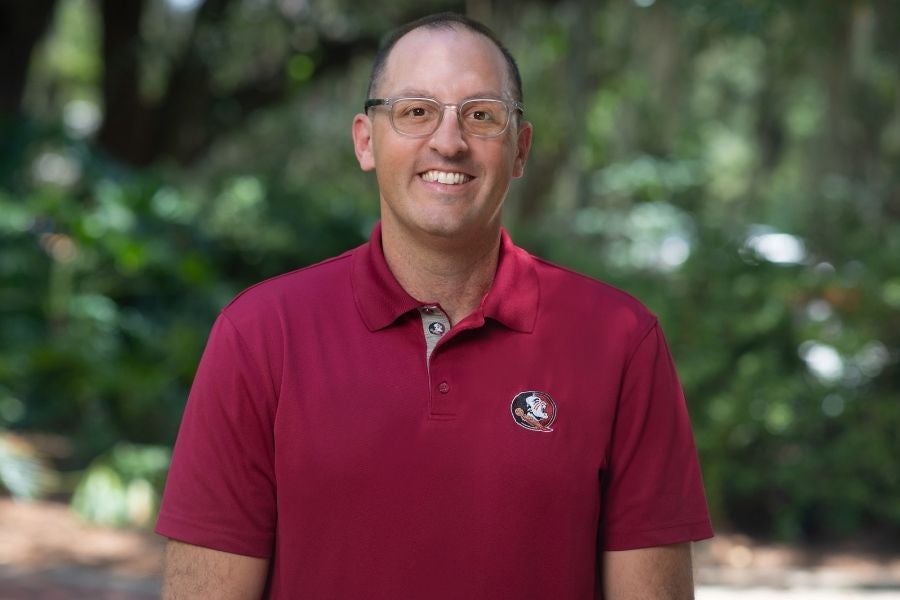
A Florida State University neuroscientist has received one of the most prestigious awards available to early career faculty for his exploration into how signals our brains receive from our sense of smell shape our perception of food and our behaviors toward it.
Assistant Professor of Biological Science and Neuroscience Douglas Storace has received a 2026 Faculty Early Career Development Award, or CAREER Award, from the National Science Foundation for his research into how olfactory cues are transformed into meaningful information that shapes perception, allowing for the recognition of food, mates and even threats. He’s the sixth FSU faculty member to earn the award this year.
The CAREER Awards Program offers NSF’s most significant awards supporting early-career faculty who can serve as role models in research and education and lead groundbreaking advances in their fields. The award provides faculty with five years of funding to support students and conduct research while developing their professional endeavors alongside NSF staff.
“This grant supports research that aims to understand how being in a bodily state, like hunger, might affect our sensory processing,” Storace said. “It’s also looking at how the brain might change how certain smells are encoded based on this state. If I’m hungry and go outside, the smell of French fries at the Seminole Café is much more prominent than when I’m not hungry. I want to know if our sensitivity to stimuli or sensory perception depends on our state.”
Storace earned his doctorate from the University of Connecticut in 2011 before working as a postdoctoral researcher at Yale University in New Haven, Connecticut, from 2011 until 2018. Since joining FSU’s faculty in early 2019, he’s led the Storace Lab in working to understand the brain area involved in recognizing and discriminating against different smells.
In addition to researching how being in a state of hunger affects olfactory sensory processing — or how being hungry affects how our brains encode information about what we smell — the Storace Lab will explore the role that orexin neurons, a unique and specific population of specialized brain cells in the hypothalamus that send signals across the entire nervous system, play in the olfactory system.
“Studies on these orexin neurons show that the molecule is implicated in alertness and sleep to some degree, and it’s known to increase appetite,” Storace said. “The human body contains an estimated 86 to 100 billion neurons, with most of them located in the brain, and only about 50,000 are orexin neurons. It’s very interesting that such a small concentration of neurons can have such a powerful effect — disruptions to the orexin system are the cause of narcolepsy, for example. Because these molecules release a neurochemical that is already implicated in many state-dependent functions including appetite, I want to identify what role they play in the olfactory system.”
In 2022, Storace was awarded a five-year, $2 million grant from the National Institutes of Health to support his research into how changes in odor concentration are encoded by the brain and transformed across the olfactory bulb circuit.
“Dr. Storace’s work has advanced our understanding of how olfactory sensory signals become meaningful perceptions that shape behavior within a complex and constantly changing sensory environment,” said Lisa Eckel, director of the FSU Program in Neuroscience. “The scientific reach of his contributions is substantial, and this new award reinforces his national and international reputation as a scholar and leader in the field of chemical senses.”
Thanks to the NSF CAREER award, Storace is increasing access to neuroscience for all audiences, ranging from early-career students to older adults. The funds supported the development of a course that provides undergraduates with hands-on experiences using neuroscience equipment, often a major obstacle due to the high price of necessary technologies. After finding a company making low-cost neuroscience equipment that can record brain activity onto a laptop, Storace launched the course, “Experimental Physiology,” in Fall 2026.
He also established a neuroscience component within FSU’s Young Scholars Program, a summer program for high school students in Florida with significant potential for careers in the fields of science, technology, engineering and mathematics to explore different research avenues, by teaching an adapted version of the Experimental Physiology course to the cohort each year. Alongside Distinguished Research Professor of Mathematics Richard Bertram and Assistant Professor of Biological Science and Neuroscience Roberto Vincis, Storace also taught a neuroscience course for older adults last year through the Osher Lifelong Learning Institute at FSU.
Storace’s research supports FSU Health, an academic health system combining the expertise of hospitals, physicians, clinics, research, education and innovation to improve the health of our community.
“I’m very honored to receive this prestigious grant because there’s something unique about it,” Storace said. “If we want to understand brain diseases or disfunctions, research like this needs to be done to define basic function — if we don’t understand how the brain or its processes work, how can we move toward a more predictive way of addressing disease?”
To learn more about Storace’s research and work conducted in FSU’s Program in Neuroscience, visit neuro.fsu.edu. For more on the Department of Biological Science research at FSU, visit bio.fsu.edu.