Some experts are concerned that erasing the need for manual calculations at the foundational level trivializes the learning process for math students and forces them to become more dependent on AI for their research. Together, the panelists will discuss challenges faced by mathematicians and solutions brought about by the relationship between AI and mathematics to help visualize a future for what researchers can do with a resource that has the ability to test hypotheses and compute calculations in minutes. The organizers also intend for this panel to highlight responsible AI use in math research.
“Mathematicians making targeted use of AI have demonstrated stunning effectiveness at tackling research-level mathematics problems,” said FSU College of Arts and Sciences Dean Sam Huckaba, who earned his doctorate in mathematics from Purdue University in 1986 and served as both FSU math faculty and in administrative roles before becoming dean. “It’s an understatement to say that the recent advancements of this technology, which are multiplying ever more swiftly and have opened possibilities not previously thought to be easily reachable, have captured the attention of the entire discipline.”
Featured panelists: Mathematics experts with unique perspectives on AI
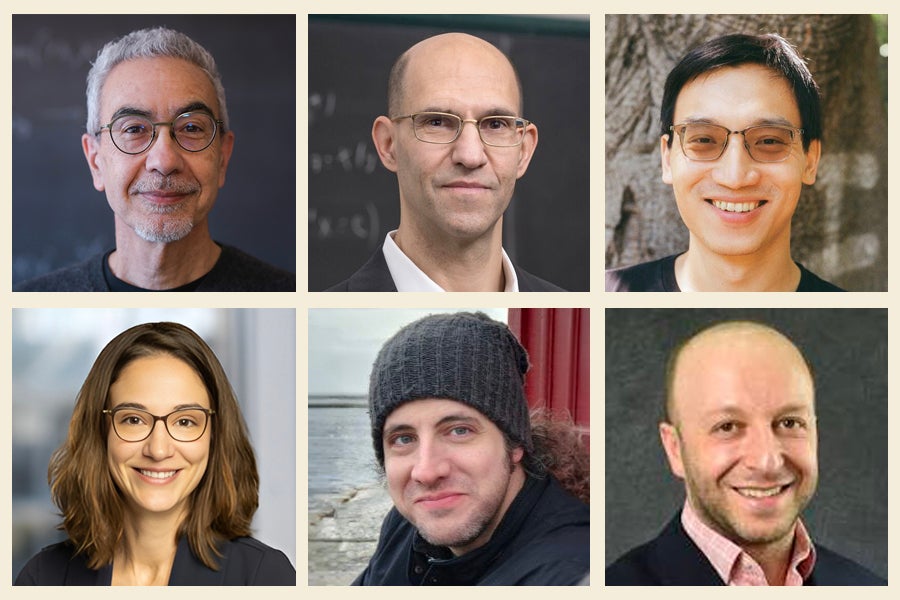
All of the six featured speakers are mathematics researchers, and most are actively studying AI and its capability to make meaningful contributions to mathematics. Panelists will provide unique perspectives to graduate students and early-career mathematicians on how to use the technology in positive ways and prepare for the future of the field. Bauer will moderate the panel, raising questions motivated by his own experiences as well as those of FSU graduate students and early-career mathematicians.
Panelists include:
- Ettore Aldrovandi, professor and chair of FSU’s Department of Mathematics
- Alex Kontorovich, distinguished professor and Department of Mathematics chair at Rutgers University
- Javier Gómez-Serrano, professor of mathematics at Brown University
- Tony Feng, associate professor of mathematics at the University of California, Berkeley
- Jeremy Avigad, professor of philosophy and mathematical sciences at Carnegie Mellon University
- Rachel Ward, distinguished professor in computational engineering and sciences at the University of Texas, Austin
“The panel event provides a fantastic opportunity for mathematics experts who have been using and thinking about AI to share their knowledge and experiences,” Huckaba said. “My hope is that it will serve as a catalyst and help the participants better understand both challenges and opportunities facing the field.”
This is the second AI-related panel Bauer will host this semester, with over 700 confirmed registrations across both events. “The crisis of AI-generated mathematics,” was held online Friday, Sept. 11, with discussions focused on a critical examination of AI and its broader implications for science and education. Participants included researchers from 205 distinct higher-education institutions or campuses across 31 countries, further demonstrating the demand for these discussions across the globe.
“One challenge for current undergraduate students is learning how to use AI without letting it become a shortcut that prevents them from developing their own understanding,” Bauer said. “I always encourage my students not to dismiss AI, as it is an essential tool that they will need to learn how to use effectively. At the same time, working through problems and calculations themselves remains necessary for understanding the deeper meaning of the material.”
Visit the “Mathematics at a Turning Point” event website for more information and to register.