
Faculty Spotlight: Meegan Kennedy
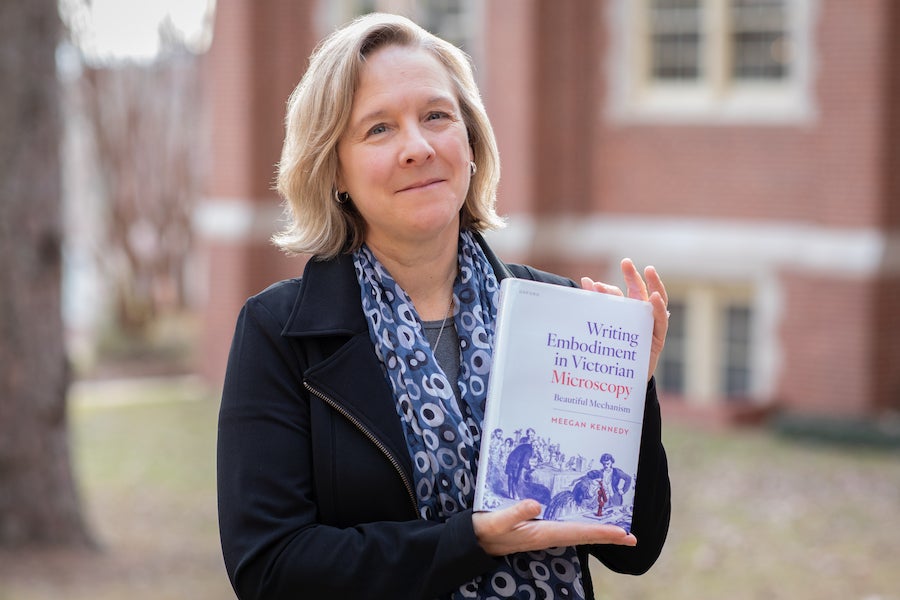
Meegan Kennedy is a professor and associate chair of undergraduate studies in the Department of English, part of Florida State University’s College of Arts and Sciences. Kennedy specializes in Victorian literature and culture, especially medicine and science. Her most recent book, “Writing Embodiment in Victorian Microscopy: Beautiful Mechanism,” published by Oxford University Press in January 2025, examines how Victorians approached the use of microscopes to observe objects and organisms too small to be seen with the naked eye as an embodied practice that required both wonder and skepticism. Kennedy earned her doctorate in English literature from Brown University in Providence, Rhode Island in 2000 before joining FSU’s faculty in 2004.
Tell us about your background.
Although I'm originally from the Northeast, I’ve lived in many places, including the Midwest; New York; New England; the Mid-Atlantic; New Orleans, Louisiana; Paris, France; London, U.K; and now Florida. I earned my bachelor’s degree in English from Yale University in New Haven, Connecticut, in 1988, and my master’s from the University of Virginia in Charlottesville, in 1992, before moving to Rhode Island for my doctorate. When I found a job opportunity at FSU, I was drawn to the English department’s strengths, but I also saw it as an opportunity to deepen my understanding of this region. I’d visited Florida beaches a few times, but I wasn’t familiar with the Panhandle’s rich culture and history.
What inspired you to pursue a career in English?
Ever since I was a child, I’ve loved reading and writing. I remember spending hours teaching my stuffed animals to read and imagining conversations and lessons.
Break down your main areas of research.
I study 19th-century British medicine, science and literature, with a focus on how we gather, verify, and share sense-based knowledge. I have published work on topics like Victorian studies, the history of science and medicine, health humanities and periodical studies.
What makes you passionate about your research topics?
The more I study the 19th century and the Victorian era — which spanned from 1837 to 1901 — the more I’m fascinated by its astounding pace of change. While British medicine in 1800 had been largely unchanged for centuries, by 1900, it had evolved into a clinical approach informed by laboratory research, public health initiatives and germ theory. People grappled with revolutionary theories about the mind, brain, senses, and humans’ relationship to nature. The rapid growth of printed materials and new forms of popular visual media at the time make this an exciting era to study.
Tell us about your recent book.
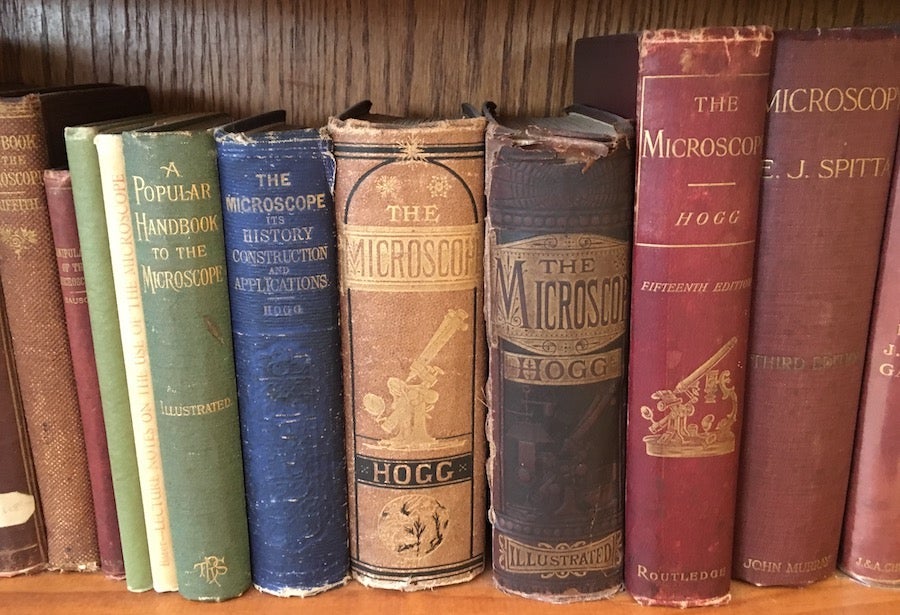
My book, “Writing Embodiment,” examines Victorian microscopy across scientific, literary, religious and popular texts. I started studying microscopy after noticing British medical researchers often described the microscope as a source of revelation and truth, yet also as difficult to handle and potentially unreliable. This dual perspective arose from the idea that observation is deeply embodied.
Victorian microscopists believed observation was shaped by mental and cognitive conditions but also physical ones like the instrument’s limitations, slide preparation, environmental vibrations, and even one’s own physical condition, such as hand and foot placement, digestion state, and the clarity of corneal fluid. They developed tropes to encourage readers to try microscopy and adopt reliable practices.
What do you want the public to know about the importance of your work?
My work examines how humans perceive the world and how they share that experience with others to build a common understanding. Studying Victorian literature, medicine, and science helps us understand how those elements of our culture are interconnected today.
What’s your favorite part about your job?
I love conducting research. In college, I had a work-study job where I worked with very old medical books in the Medical Historical Library at the Yale School of Medicine. I became captivated by these quirky old books and the stories about medicine within. Now, with more knowledge about the subject, I enjoy the thrill of digging through dusty pages and uncovering the unexpected.
I’ve always been curious about what’s hidden in those books, chasing information across multiple sources to piece it together. I love setting students up with the tools they need and watching them experience that feeling. One of my best memories has been teaching at the FSU London Study Center, where the texts and the place's history come together for students, and you see them experience the material in an almost visceral way.
Who are your role models?
My mother and two of my early teachers, Ruth Sauter and Pam Cressman, encouraged me to explore reading and music. Another role model was my father, who exemplified a spirit of intellectual exploration. He worked as a pharmacist, a laboratory chemist, and an intellectual property lawyer, and he was also an art dealer specializing in the New Hope Impressionists, an American Impressionist movement in the early 20th century. My dissertation director, Bob Scholes, also continuously reinvented his work as fields evolved over his long career. These examples of crossing boundaries gave me the confidence to take my literary training off the beaten path.
Do you have any exciting projects you’re working toward?
One book project I’m working on explores how Victorians accessed microscopical images across different media. During this era, microscopes became essential scientific tools. Early photographers experimented with microscope lenses, and photographs of microscopic objects sparked debates about the limits of these tools.
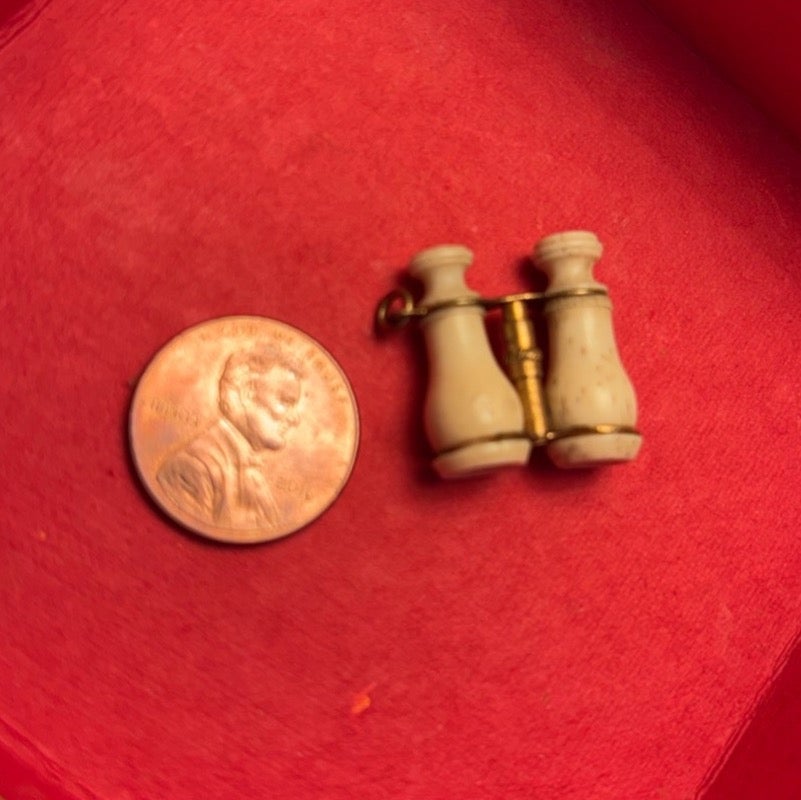
By mid-century, people purchased Stanhope trinkets — small objects fitted with a microscopic lens that revealed a tiny photograph when held to the eye — often embedded in souvenirs like crosses, pen holders, needle cases and jewelry. Oxyhydrogen microscope demonstrations offered another way for Victorians to encounter microscopic imagery. They used an intense light source to project enlarged images of tiny organisms onto a large screen, creating animated scenes described as fighting animalcules. Microscopes played a significant role in the 19th-century rise of popular visual media.
If your students only learned one thing from you (of course, hopefully they learn much more than that), what would you hope it to be?
Stay curious!