Music as medicine
Music therapy research featured prominently throughout the symposium, with presentations spanning infancy through adolescence. Adriana Lizardi-Vázquez, a doctoral student in music therapy, opened her presentation by singing a lullaby commonly used by caregivers in Puerto Rico. Drawing from a study of caregivers with infants ranging from newborns to 18 months old, Lizardi-Vázquez documented more than 180 distinct lullabies and identified shared musical characteristics such as simple melodies, slow tempo and repetition.
Her findings highlight how familiar music supports bonding, language development and emotional regulation.
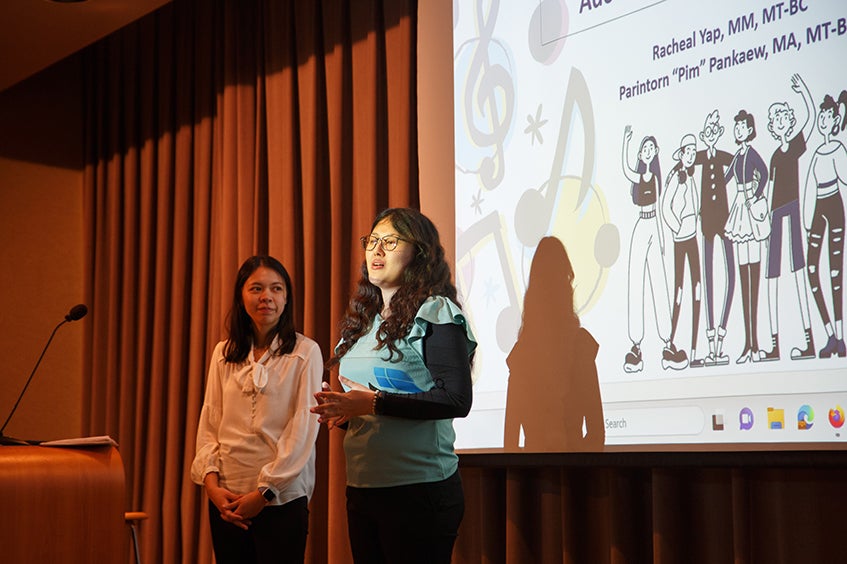
Other research explored adolescents’ use of music as a coping strategy. Doctoral students Parintorn “Pim” Pankaew and Shun Ee “Racheal” Yap presented findings from a statewide survey of Florida adolescents, revealing widespread use of music for stress management, emotional expression and relaxation. Their work explores how these patterns can inform music therapy–informed wellness and mental health interventions.
James E. Riley addressed professional development in music therapy, sharing preliminary findings on entrepreneurship in the field. While nearly 90% of surveyed music therapy students expressed interest in entrepreneurial work, a similar percentage reported receiving little to no formal guidance.
“There’s a disconnect between how students are trained and the professional realities they will face,” Riley said. “Future music therapists must develop professional and entrepreneurial skills alongside clinical training to navigate today’s healthcare and wellness industries.”
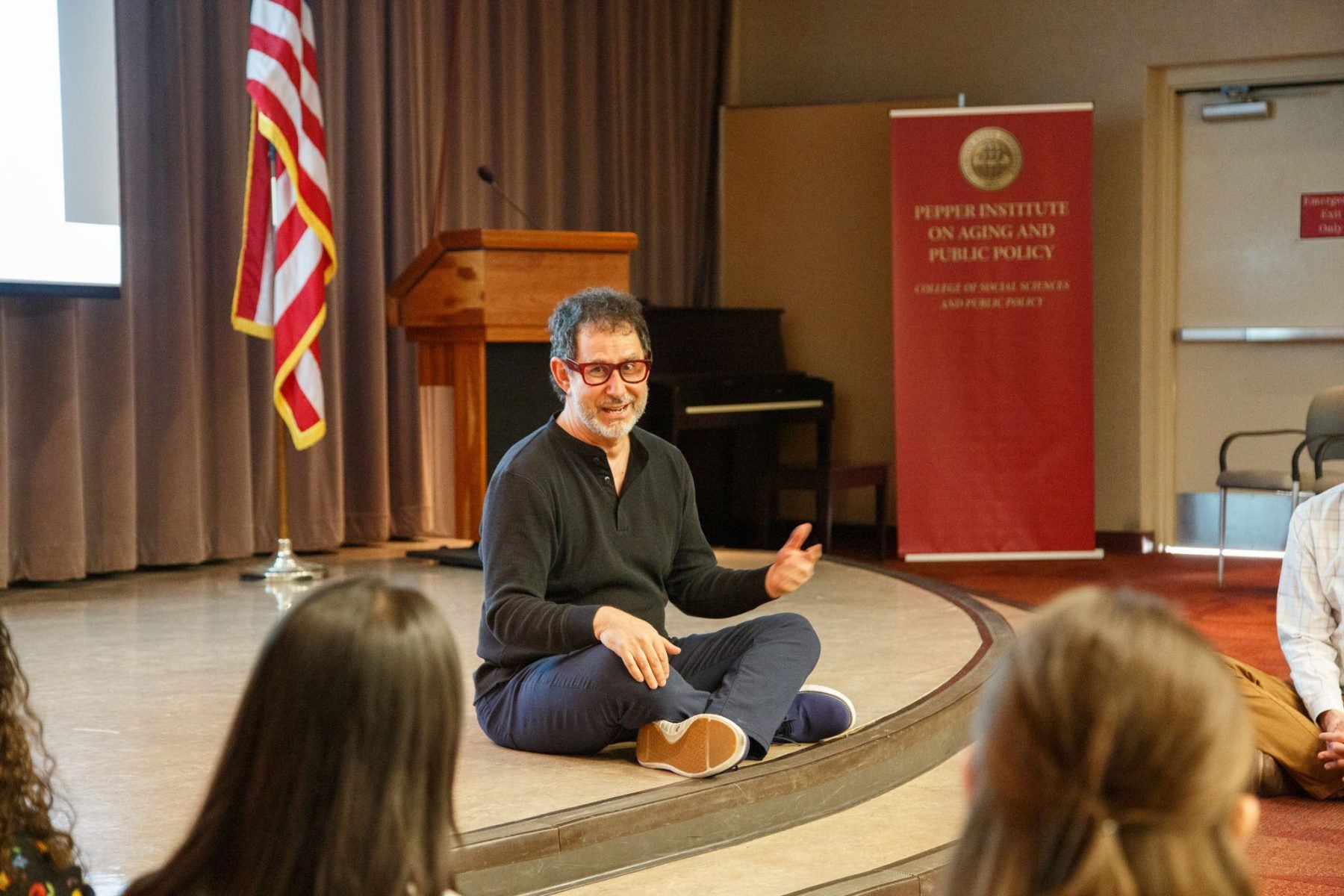
In an experiential session, Michael Bakan, professor of ethnomusicology, led participants in a group vocal performance inspired by the gamelan suara, or “vocal gamelan,” of Bali, Indonesia, demonstrating how collective music-making can foster social cohesion, wellness and joy.